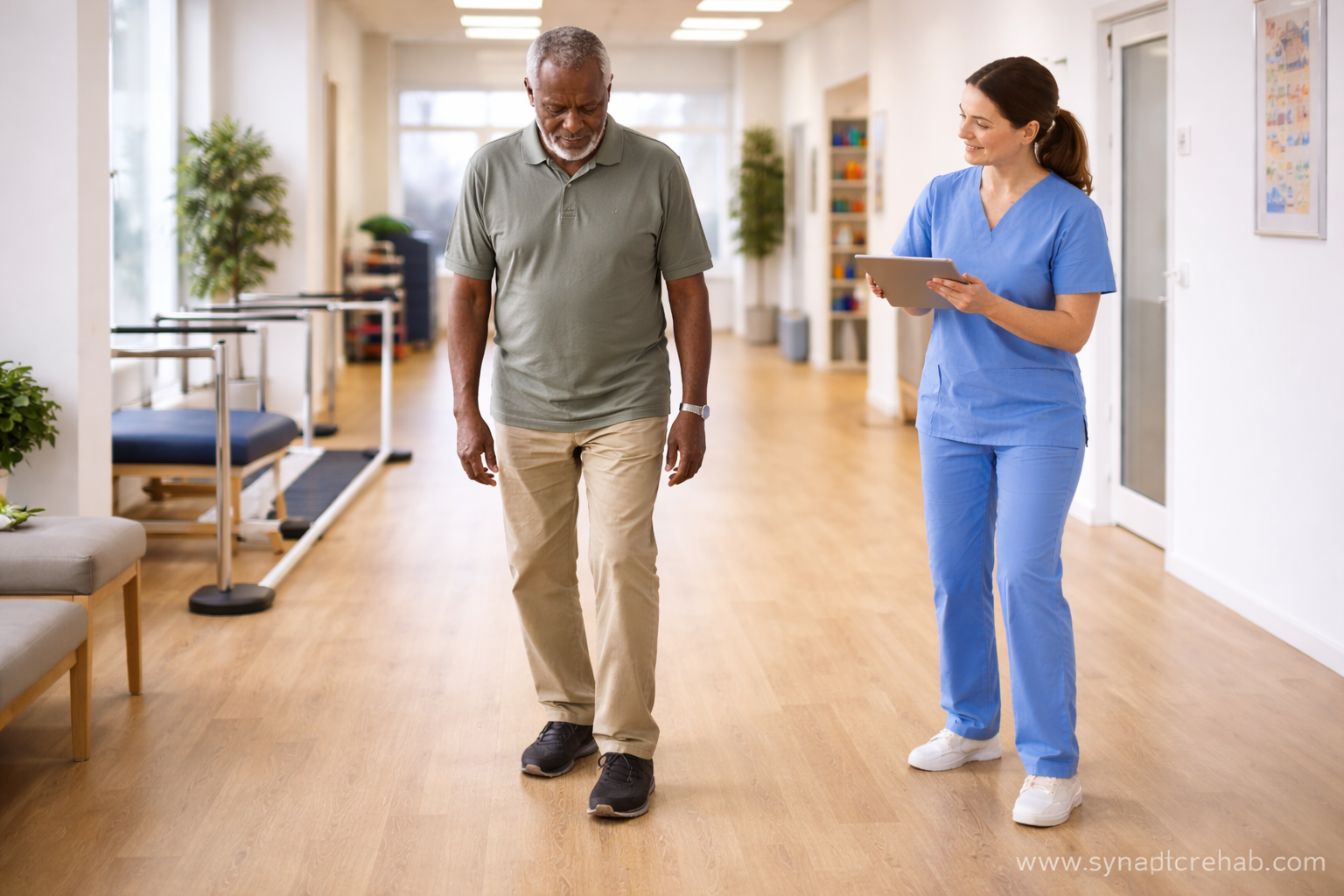
Many people don’t notice their walking speed slowing down — until someone else points it out or daily tasks start feeling harder.
Walking slower may feel like a safe adjustment, but it’s often a signal that strength, balance, or coordination is declining. In many cases, it’s one of the earliest signs that the body needs support.
Understanding what slower walking speed really means can help you take action before bigger problems develop.
Why Walking Speed Matters
Walking speed isn’t just about pace. It reflects how well multiple systems are working together, including:
- Leg strength
- Balance and coordination
- Reaction time
- Postural control
- Neurological function
That’s why healthcare professionals often refer to walking speed as a “vital sign” for older adults.
External source:
https://www.ncbi.nlm.nih.gov/pmc/articles/PMC4750347/
Common Reasons Walking Speed Slows
1. Loss of Strength
Weakness in the hips, thighs, and core makes it harder to push off the ground efficiently, leading to shorter, slower steps.
Internal link:
[Why Getting Up From a Chair Gets Harder With Age — and How Physical Therapy Fixes It](internal link to published blog)
2. Balance Concerns
When balance feels uncertain, the brain naturally slows movement to feel safer. Unfortunately, slower walking often reduces stability instead of improving it.
Internal link:
[The First 5 Signs Your Balance Is Declining](internal link to published blog)
3. Changes in Gait Pattern
Reduced arm swing, shorter steps, and shuffling all contribute to slower walking speed.
Internal link:
[Shuffling When You Walk? What It Means and When to Seek Help](internal link to published blog)
4. Neurological Conditions
In conditions like Parkinson’s disease, walking speed may decrease due to:
- Bradykinesia (slowness of movement)
- Rigidity
- Freezing of gait
Internal link:
[Freezing of Gait in Parkinson’s: Why It Happens More Often in Winter](internal link to published blog)
External source:
https://www.parkinson.org/understanding-parkinsons/movement-symptoms
5. Fear of Falling
After a fall or near-fall, many people unconsciously slow down. While understandable, this often leads to stiffness, hesitation, and further decline.
Internal link:
[How Physical Therapy Helps You Regain Confidence After a Near-Fall](internal link to published blog)
Why Slower Walking Speed Increases Fall Risk
Walking slower may feel safer, but it can actually:
- Reduce momentum needed for stable movement
- Increase time spent in single-leg stance
- Limit the body’s ability to recover from a stumble
According to the CDC, changes in walking speed are linked to increased fall risk in older adults.
External source:
https://www.cdc.gov/falls
How Physical Therapy Helps Improve Walking Speed
1. Strength Training
Physical therapy targets the muscles that drive walking:
Stronger muscles allow for longer, more efficient steps.
2. Gait Retraining
Therapists assess and retrain:
- Step length
- Cadence
- Arm swing
- Posture
Internal link:
How Physical Therapy Helps Improve Gait and Balance as You Age
3. Balance and Reaction Work
Balance exercises improve confidence and speed by teaching the body to respond quickly and accurately to movement challenges.
4. Parkinson’s-Specific Strategies
For individuals with Parkinson’s disease, therapy includes cueing, movement strategies, and high-effort training to improve walking speed and safety.
Internal link:
Parkinson’s Disease Treatment Programs
When Slower Walking Speed Should Be Addressed
You should consider physical therapy if:
- Your walking speed has noticeably slowed
- Others comment on how you walk
- You fatigue quickly when walking
- You feel less confident moving around
- You’ve had near-falls or falls
Early intervention leads to better outcomes.
Walking Slower Isn’t Inevitable
Slower walking speed doesn’t have to be accepted as “just aging.” With the right approach, many people regain speed, stability, and confidence.
Schedule a Gait & Mobility Evaluation
📍 Synaptic Rehabilitation
1200 Route 22 East, Suite 4
Bridgewater, NJ 08807
📞 Call: 908-801-6425