MOVEMENT WITH A PURPOSE
What Is Rock Steady Boxing?
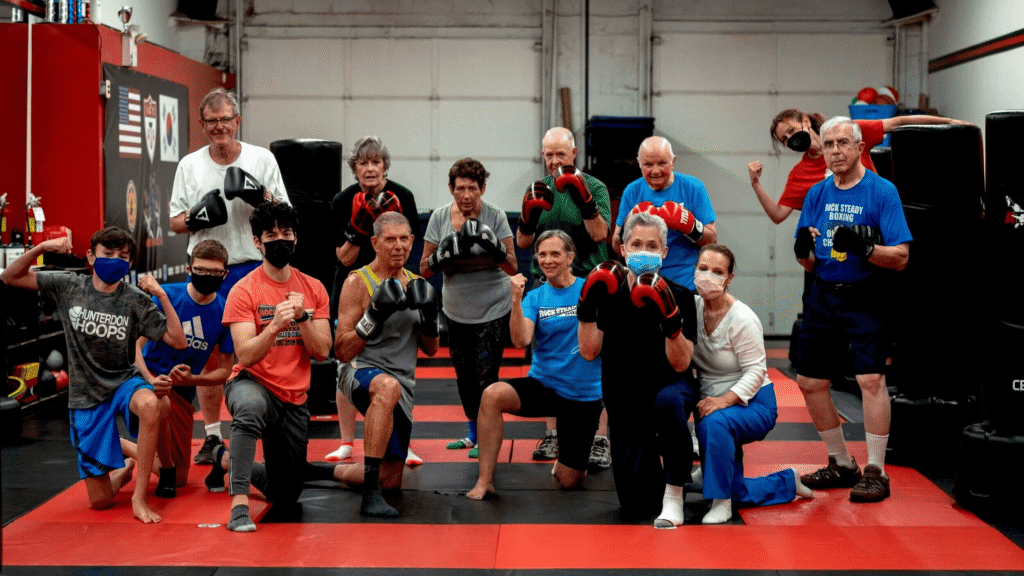
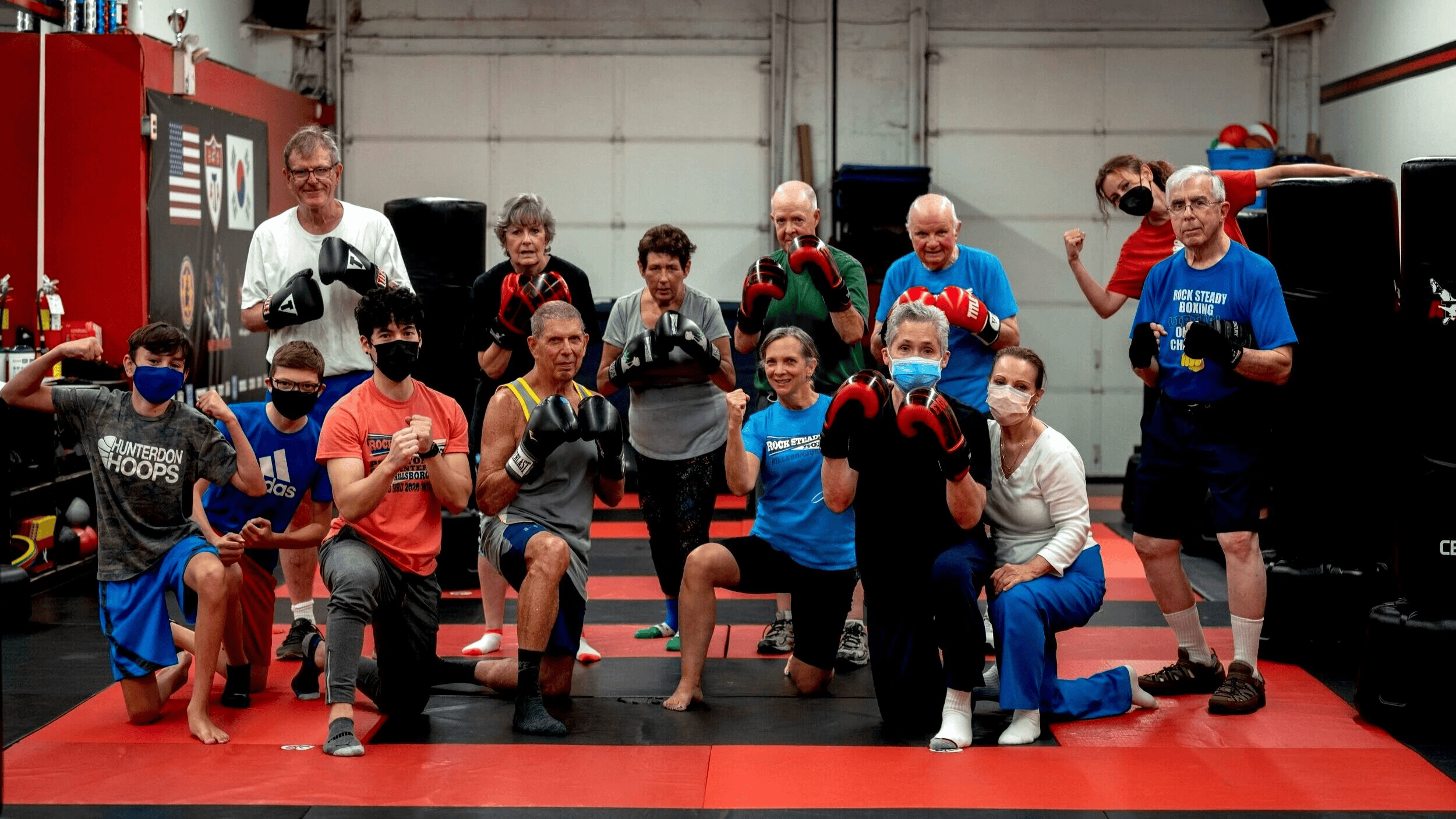
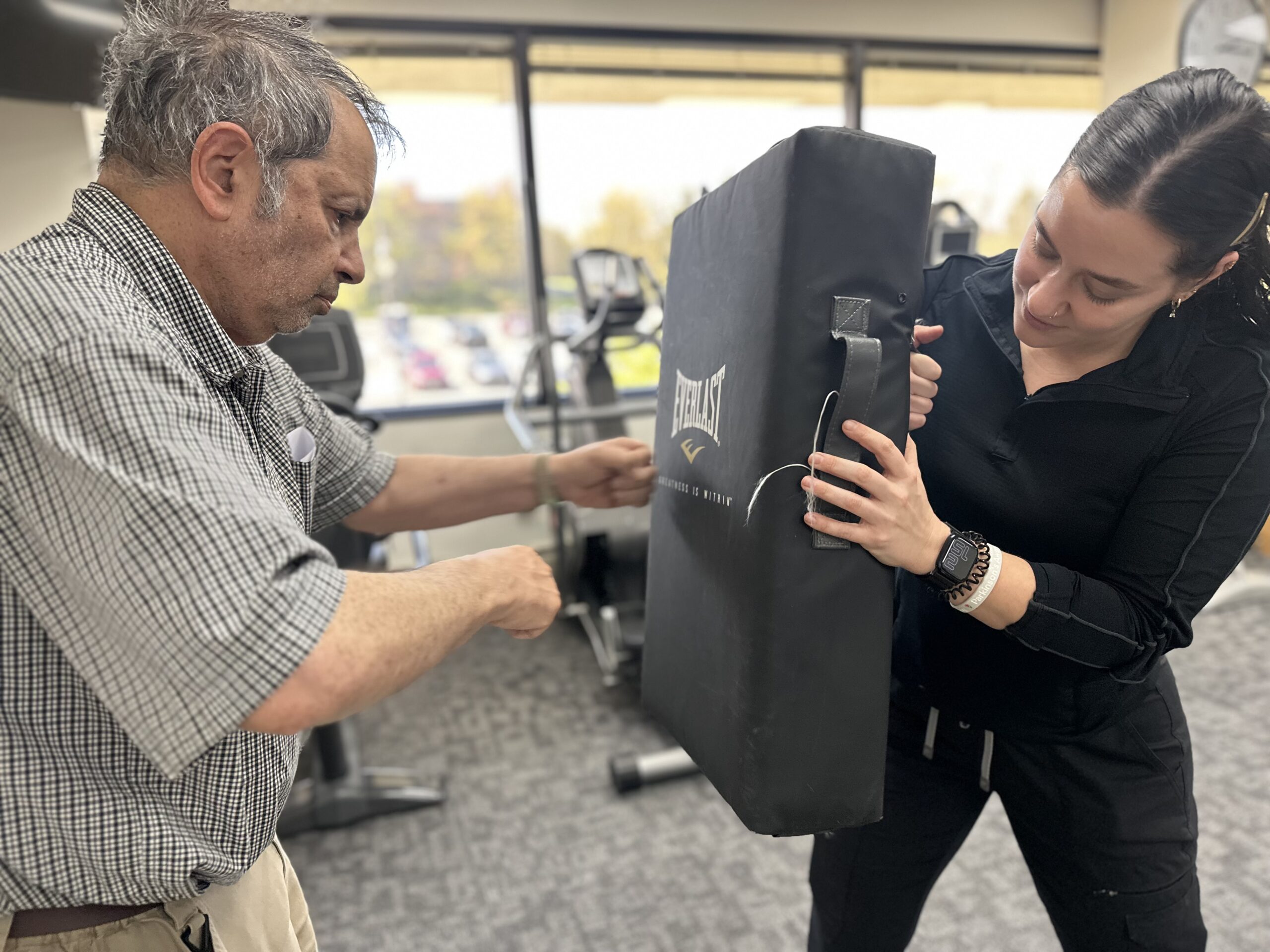
Rock Steady Boxing is a non-contact, Parkinson’s-specific exercise program that uses boxing-style movements to help address the physical challenges caused by Parkinson’s disease. There is no sparring or physical contact. Instead, participants perform structured exercises such as punching drills, footwork, balance challenges, and functional strength training. These exercises are designed to challenge both the body and brain, helping participants move better, react faster, and feel more confident in daily life.
01 / MOVE
Practice Everyday Movement
Work on coordination, balance and strength through varied activities.
02 / CONNECT
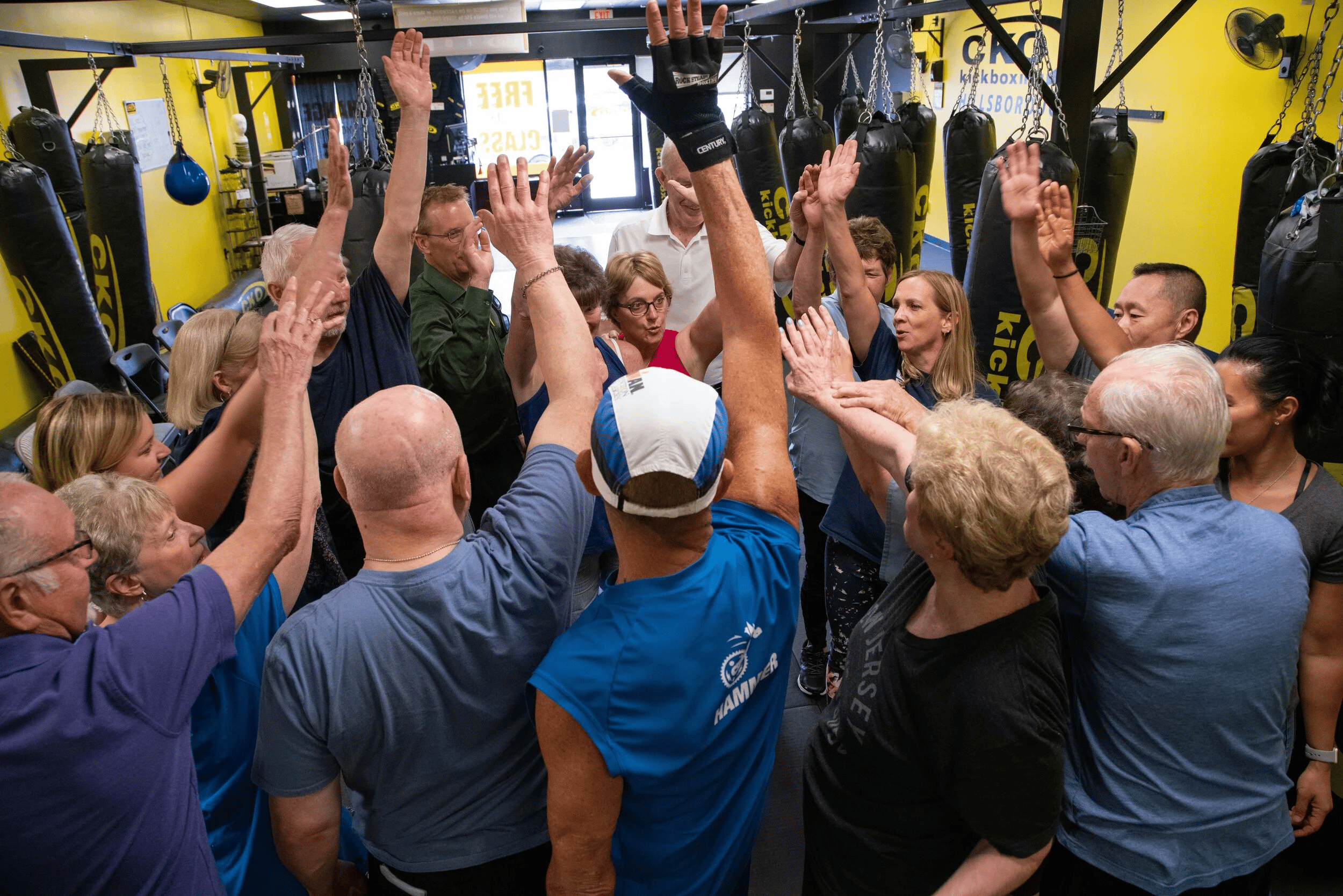
A Community In Your Corner
Share the effort and encouragement with people who understand the experience.
03 / START
Find the Right Starting Point
Talk with our team about your goals, mobility, and class placement.
Who Is Rock Steady Boxing For?
Rock Steady Boxing may be appropriate for individuals who:
Have been diagnosed with Parkinson’s disease
Experience balance issues, stiffness, or slowed movement
Want a Parkinson’s-focused exercise program
Are looking for a structured, motivating group setting
Are already participating in physical therapy or neurological rehabilitation
Programs can be adapted for different stages of Parkinson’s, from early diagnosis to more advanced conditions.
What to Expect in a Rock Steady Boxing Class
Each Rock Steady Boxing session may include:
Dynamic warm-up and mobility exercises
Boxing-inspired punching drills (non-contact)
Footwork and agility training
Balance and coordination exercises
Strength and endurance activities
Cool-down and stretching
Exercises are modified as needed to ensure participants feel challenged while remaining safe and supported.
"Our goal is to help you move bigger, faster, and more confidently every day." - Dr. Steven Cheung
FIND YOUR CLASS
Rock Steady Boxing at Synaptic Rehabilitation
Clinic Locations & Hours in NJ
Hillsborough Location
The MAX Challenge
- Class 1- Bashing Boxers: 10:30 AM – 12:00 PM
- Class 2- Fearless Fighters: 12:30 PM – 1:45 PM
- Class 3- Heavy Hitters: 2:15 PM – 3:45 PM
West Windsor (Mercer) Location
The MAX Challenge
- Class 1- Heavy Hitters: 12:00 PM – 1:30 PM
- Class 2- Fearless Fighters: 2:00 PM – 3:30 PM
Can't Go In Person? Or Just Want To Stay At Home?
We offer Virtual RockSteady Program via ZOOM
Virtual Zoom Classes Slots
- Monday & Wednesday: 7:30 PM – 8:45 PM
- Tuesday & Thursday: 10:45 AM – 12:00 PM
FAMILLIAR
Your Boxing Community.
The broader synaptic team.
Barbara Kelly | Head Coach
Barbara continues to lead our RockSteady Boxing Community. The program is operated by Synaptic Rehab.
Meet the team & explore support beyond the class.

Rock Steady Boxing is operated by Synaptic Rehabilitation
Supporting movement, confidence, and community for people with Parkinson’s.
OUR ROCKSTEADY COMMUNITY
How Rock Steady Boxing Helps People with Parkinson’s
OUR PATIENT REVIEWS


 Trustindex verifies that the original source of the review is Google.
 Trustindex verifies that the original source of the review is Google.

 Trustindex verifies that the original source of the review is Google.
 Trustindex verifies that the original source of the review is Google.
 Trustindex verifies that the original source of the review is Google.
 Trustindex verifies that the original source of the review is Google.
 Trustindex verifies that the original source of the review is Google.
 Trustindex verifies that the original source of the review is Google.
 Trustindex verifies that the original source of the review is Google.
 Trustindex verifies that the original source of the review is Google.
Send Us A Message!
Frequently Asked Questions (FAQ)
Yes. Rock Steady Boxing is designed with Parkinson’s symptoms in mind. Exercises are adapted based on individual ability levels, balance, and mobility, and there is no sparring or physical contact involved.
No boxing experience is required. Rock Steady Boxing classes are designed for beginners and focus on movement, balance, and coordination rather than traditional boxing skills.
Rock Steady Boxing can benefit individuals at many stages of Parkinson’s, from early diagnosis to more advanced conditions. Programs are often modified to match each participant’s physical abilities and safety needs.
Yes. Many of the exercises used in Rock Steady Boxing target balance, footwork, posture, and coordination, which are commonly affected by Parkinson’s disease. These exercises may help improve walking confidence and reduce fall risk.
Rock Steady Boxing is a group-based exercise and fitness program, while physical therapy is one-on-one medical treatment. Many people with Parkinson’s benefit most when Rock Steady Boxing is combined with Parkinson’s-focused physical therapy.
Yes. Rock Steady Boxing often works well alongside physical therapy. Your physical therapist can help determine when and how to safely participate based on your mobility, balance, and overall condition.