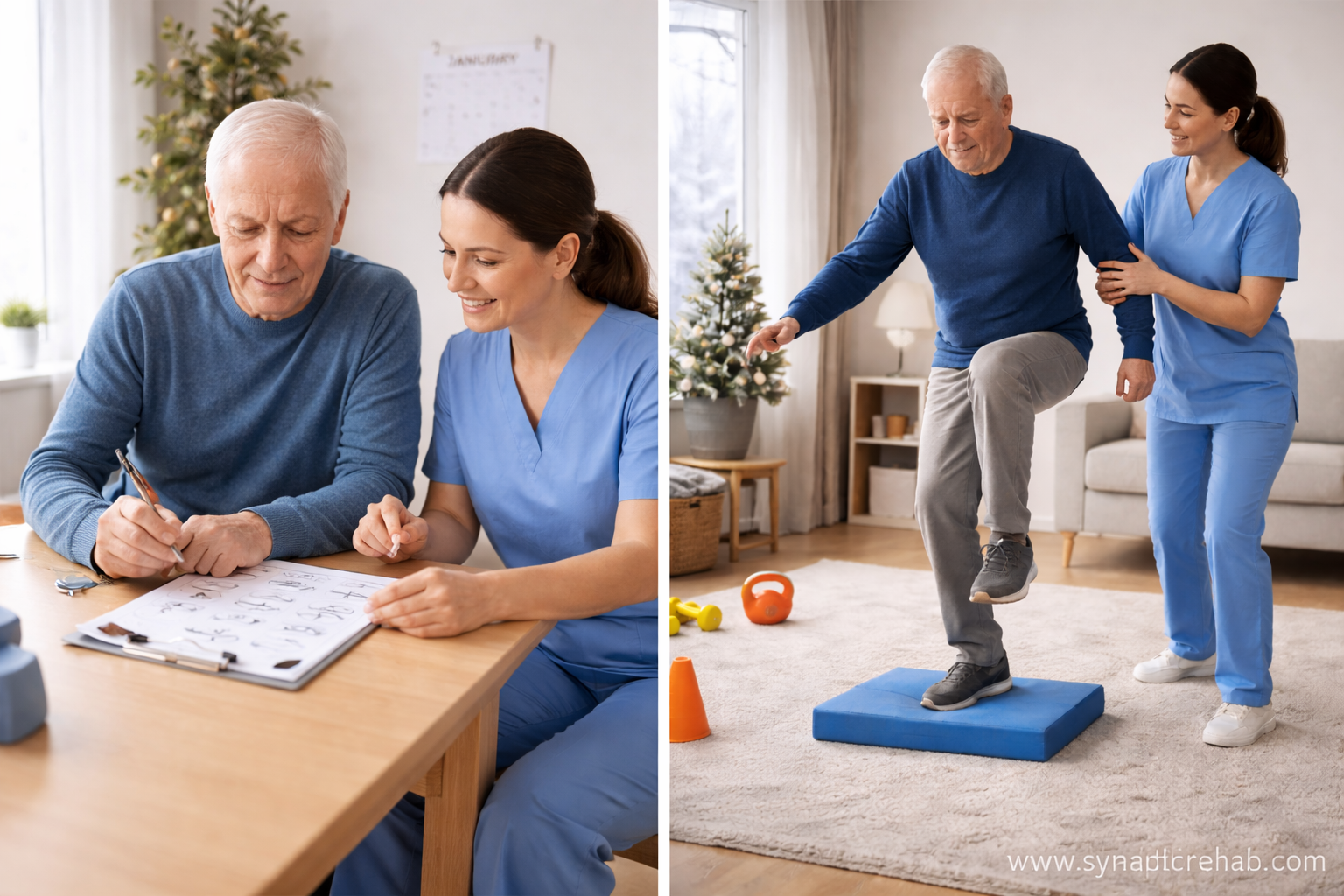
The New Year often brings big promises: walk more, move better, feel stronger.
But for many older adults, vague or unrealistic goals lead to frustration — not progress.
The key to better mobility in the New Year isn’t pushing harder. It’s setting realistic, specific goals and using the right support to reach them safely.
That’s where physical therapy makes the difference.
Why Mobility Goals Matter
Mobility isn’t just about exercise. It affects:
- Balance and fall risk
- Independence at home
- Confidence in public spaces
- Ability to participate in daily activities
- Overall quality of life
When mobility declines, people often adapt by moving less — which accelerates weakness and instability.
Setting clear mobility goals helps stop that cycle.
Common New Year Mobility Goals
Most people don’t want to “train” — they want to function better. Common goals include:
- Standing up from a chair without using hands
- Walking longer distances without fatigue
- Feeling steadier on stairs
- Reducing fear of falling
- Improving walking speed or posture
Internal link:
[Why Getting Up From a Chair Gets Harder With Age — and How Physical Therapy Fixes It](internal link to published blog)
Why Generic Resolutions Fail
Goals like “get stronger” or “be more active” fail because they:
- Aren’t measurable
- Don’t address underlying limitations
- Ignore balance and safety
- Lack professional guidance
Without a plan, people often stop when progress feels slow — or when discomfort sets in.
How Physical Therapy Turns Goals Into Progress
1. Individualized Assessment
A physical therapist starts by evaluating:
- Strength
- Balance
- Gait pattern
- Joint mobility
- Fall risk
This ensures goals are realistic and tailored — not generic.
Internal link:
How Physical Therapy Helps Improve Gait and Balance as You Age
2. Measurable, Functional Goals
Instead of vague targets, therapy focuses on outcomes like:
- Standing from a standard chair independently
- Walking a specific distance safely
- Navigating stairs or uneven surfaces
- Improving walking speed or stability
Progress is tracked and adjusted as strength improves.
3. Strength and Balance Training
Physical therapy targets the muscle groups and systems that matter most:
- Hips and thighs
- Core muscles
- Balance reactions
- Postural control
This builds strength that directly translates to everyday movement.
4. Gait and Movement Retraining
Walking patterns often change gradually without people noticing.
Therapists correct:
- Shuffling steps
- Reduced arm swing
- Forward-leaning posture
- Hesitation during turns
Internal link:
[Shuffling When You Walk? What It Means and When to Seek Help](internal link to published blog)
5. Parkinson’s-Specific Goal Setting
For individuals with Parkinson’s disease, goals must account for symptoms like rigidity, freezing, and slowed movement.
Our Parkinson’s Disease Treatment Programs focus on maintaining function, confidence, and safety throughout the year.
External source:
https://www.parkinson.org/understanding-parkinsons/movement-symptoms
Why Starting Early in the Year Helps
Beginning therapy in January offers advantages:
- Less deconditioning than later in winter
- Faster strength gains
- Reduced fall risk before spring activity increases
- Momentum that carries into the rest of the year
According to the CDC, early intervention is one of the most effective ways to reduce fall risk in older adults.
External source:
https://www.cdc.gov/falls
Progress Over Perfection
Mobility goals don’t need to be dramatic to be meaningful. Small, consistent improvements lead to:
- Greater confidence
- Safer movement
- Increased independence
- Better long-term outcomes
The right plan makes progress sustainable.
Start the New Year With a Clear Plan
If you’re ready to move better — not just promise to — physical therapy provides the structure, guidance, and accountability that resolutions lack.
Schedule a Mobility & Balance Evaluation
📍 Synaptic Rehabilitation
1200 Route 22 East, Suite 4
Bridgewater, NJ 08807
📞 Call: 908-801-6425