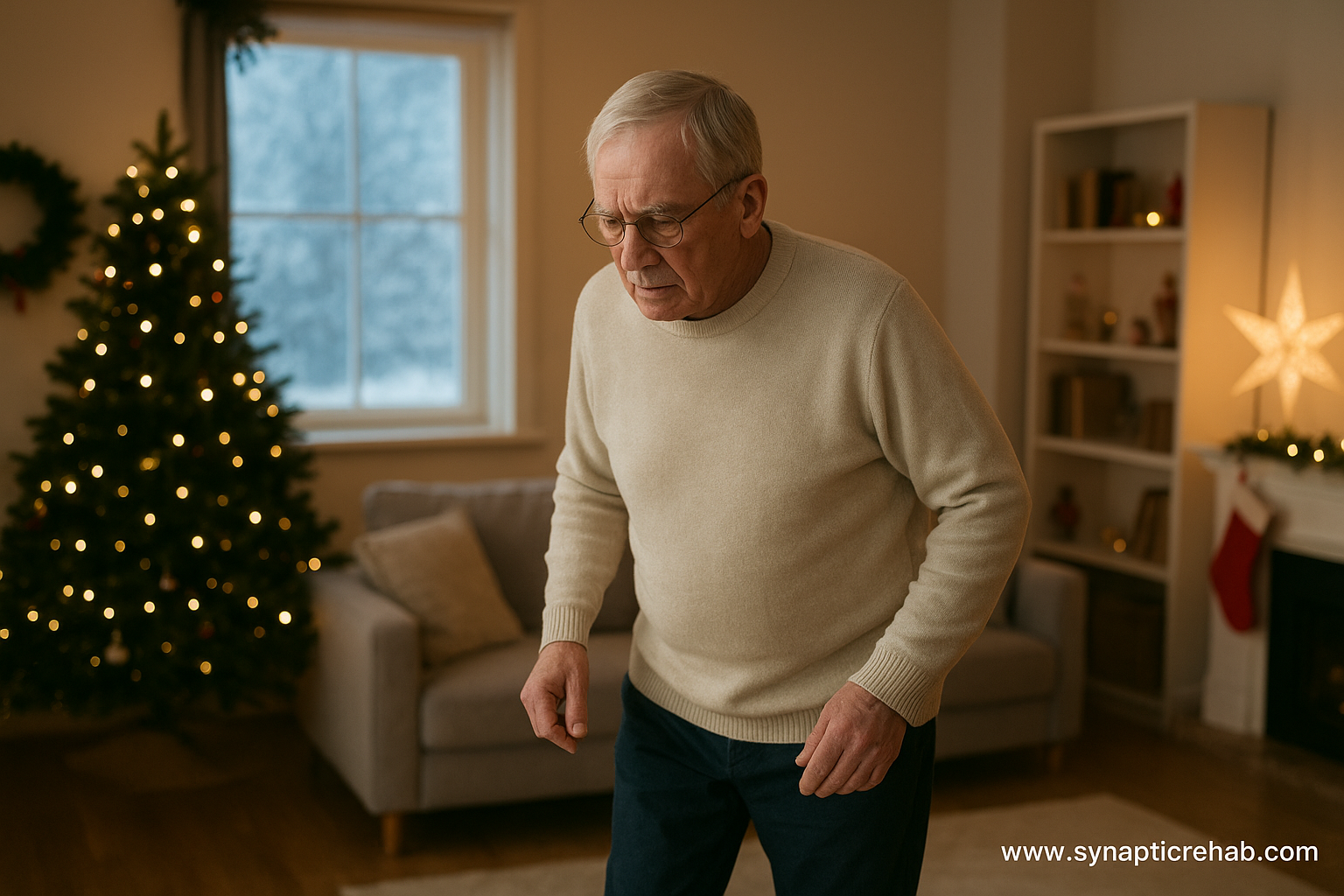
December is one of the busiest months of the year — yet it’s also when many older adults begin to feel noticeably slower, stiffer, and less steady on their feet.
We call this the December Slowdown, and it’s more common than you think.
The colder weather, holiday routines, crowded gatherings, and changes in activity all work together to affect mobility. The good news? Knowing what causes the slowdown makes it much easier to prevent.
Here’s what’s really happening — and how to stay strong and confident through the entire holiday season.
1. Less Movement = Fast Strength Loss
Between cold mornings, shorter days, and holiday prep, most people move much less in December.
But for seniors, even a small drop in activity causes:
- weaker leg and core muscles
- slower walking speed
- difficulty standing from chairs
- poor balance and coordination
This is why the holidays are a prime time for falls.
If mobility has already started slipping, a targeted program like our Gait and Balance Therapy can help rebuild strength quickly.
2. Cold Weather Stiffens Muscles and Joints
Cold temperatures reduce circulation, making muscles feel tight and slow to respond.
For older adults — especially those with arthritis, Parkinson’s, or neuropathy — the cold exaggerates:
- morning stiffness
- slowness
- joint discomfort
- balance challenges
It’s one of the biggest contributors to the winter dip in mobility.
3. Holiday Stress Drains Energy and Stability
December comes with:
- late nights
- long to-do lists
- social obligations
- disrupted routines
Stress has a direct impact on physical function. It can increase muscle tension, worsen fatigue, and reduce focus while walking — all of which raise fall risk.
External resource:
Stress and Physical Health — NIH
4. Changes in Routine Disrupt Mobility
Travel, skipped workouts, different meal schedules, and inconsistent sleep all affect the body’s ability to move well.
For individuals with Parkinson’s, routine disruption can even increase freezing episodes or worsen “off” times. If you’ve noticed changes, explore our Parkinson’s Disease Treatment Programs for support.
5. Busy, Cluttered Homes Increase Fall Risk
Decorations, wires, extension cords, gifts on the floor, crowded kitchens — all perfectly normal in December, but all major hazards for seniors.
Even confident walkers may become unsteady when paths are blocked or flooring becomes slippery.
6. More Sitting, Less Strength
Holiday movies, long meals, family parties — they all lead to more time sitting.
Extended sitting weakens:
- glutes
- hip stabilizers
- core muscles
- posture
By January, many people feel weaker without understanding why.
How to Prevent the December Slowdown
1. Move Every Day — Even Indoors
A few minutes of activity goes a long way:
- 5–10 minutes of indoor walking
- sit-to-stand repetitions
- light stretching
- gentle balance drills
Your body needs consistent movement to stay stable.
2. Warm Up Before Heading Into the Cold
Try:
- marching in place
- shoulder rolls
- ankle pumps
- slow twists
Warming up reduces stiffness before stepping outside.
3. Declutter Holiday Spaces
Make sure walkways are clear of:
- gifts
- cords
- rugs
- decorations
A safer home = fewer December falls.
4. Keep Stress in Check
Small habits help:
- take breaks
- ask for help with tasks
- keep meals and sleep times consistent
Stress directly affects mobility — especially for seniors.
5. Get a Mobility Tune-Up
If you’re feeling slower, stiffer, or unsteady, December is the perfect time for a movement assessment.
A tailored program can help improve:
- strength
- walking speed
- reaction time
- balance
- posture
Explore our Parkinson’s Wellness Center or general Gait & Balance Services to stay ahead of winter decline.
Stay Strong All Season With Synaptic Rehabilitation
The December Slowdown is common — but preventable.
With the right strategies and support, you can stay active, steady, and confident through every holiday gathering.
📍 1200 Route 22 East, Suite 4, Bridgewater, NJ 08807
📞 908-801-6425