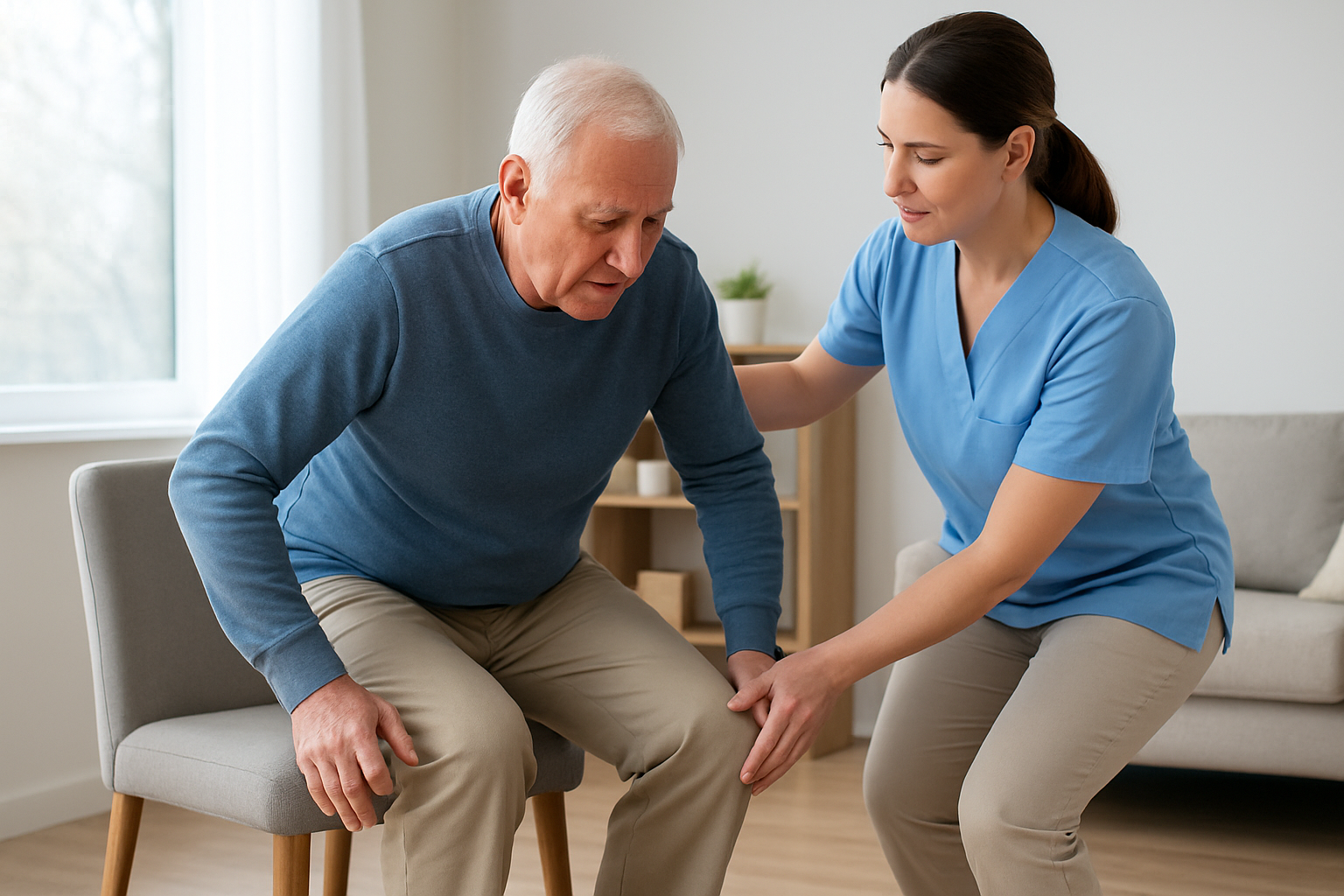
If standing up from a chair feels harder than it used to, you’re not imagining it — and you’re not alone.
This is one of the most common early signs of strength and balance decline, especially in older adults.
Many people brush it off as “just getting older.” But difficulty standing is often a warning sign — and one that physical therapy can directly address.
Why Standing Up Is Such a Big Deal
Standing up from a chair isn’t a simple movement. It requires:
- Leg strength (especially thighs and hips)
- Core stability
- Balance and coordination
- Proper timing and posture
When any of these decline, the body compensates — often by pushing off armrests, rocking forward, or needing multiple attempts to stand.
Over time, this increases fall risk and reduces independence.
Why It Gets Harder With Age
1. Loss of Leg and Hip Strength
As we age, muscle mass naturally decreases — especially in the quadriceps, glutes, and hips, which are essential for standing.
Without enough strength, the body struggles to lift itself against gravity.
2. Reduced Core Stability
The core helps control posture and balance during transitions.
When core strength declines, standing becomes slower, shakier, and less controlled.
3. Balance Changes
Standing up requires shifting weight forward, then stabilizing quickly.
If balance reactions are slower, the brain senses instability — and the body hesitates.
This is especially common in people dealing with neurological conditions like Parkinson’s disease.
Internal link:
How Physical Therapy Helps Improve Gait and Balance as You Age
4. Joint Stiffness or Pain
Arthritis, joint stiffness, or limited range of motion in the hips, knees, or ankles can make standing painful — leading people to avoid movement and lose more strength.
5. Fear of Falling
Once someone feels unsteady, fear creeps in.
Fear changes how the body moves — causing hesitation, stiffness, and unsafe movement patterns.
This fear-fall cycle often starts with something as simple as difficulty standing up.
Why You Shouldn’t Ignore This Sign
Trouble standing from a chair is linked to:
- Increased fall risk
- Loss of independence
- Slower walking speed
- Difficulty climbing stairs
- Higher risk of injury
According to the CDC, lower-body weakness is one of the strongest predictors of falls in older adults.
External source:
https://www.cdc.gov/falls
How Physical Therapy Fixes the Problem
The good news: this issue is highly treatable.
Physical therapy focuses on rebuilding the exact skills needed to stand safely and confidently.
1. Targeted Strength Training
A physical therapist strengthens the muscles that matter most:
Exercises are scaled to your ability — no gym required.
2. Balance & Postural Training
Therapy retrains how your body shifts weight and stabilizes after standing, reducing wobbling and hesitation.
Internal link:
Gait and Balance Therapy Programs
3. Sit-to-Stand Retraining
This isn’t just “doing squats.”
Therapists teach:
- Proper foot placement
- Safe momentum strategies
- Controlled standing and sitting
- How to stand without relying on armrests
4. Parkinson’s-Specific Support (When Needed)
For individuals with Parkinson’s disease, standing up may be affected by bradykinesia, rigidity, or freezing.
Our Parkinson’s Disease Treatment Programs address these challenges with condition-specific strategies.
When to Seek Help
You should consider physical therapy if you:
- Push off armrests every time you stand
- Rock back and forth to get momentum
- Need multiple attempts to stand
- Feel unsteady once upright
- Avoid low chairs altogether
Early treatment prevents this from turning into a fall or long-term mobility loss.
Regain Strength and Independence
Standing up should not feel like a struggle. With the right therapy, most people see real improvement in strength, balance, and confidence — often faster than they expect.
If this movement has become harder for you or a loved one, now is the time to address it.
Schedule a Strength and Balance Assessment
📍 Synaptic Rehabilitation
1200 Route 22 East, Suite 4
Bridgewater, NJ 08807
📞 Call: 908-801-6425