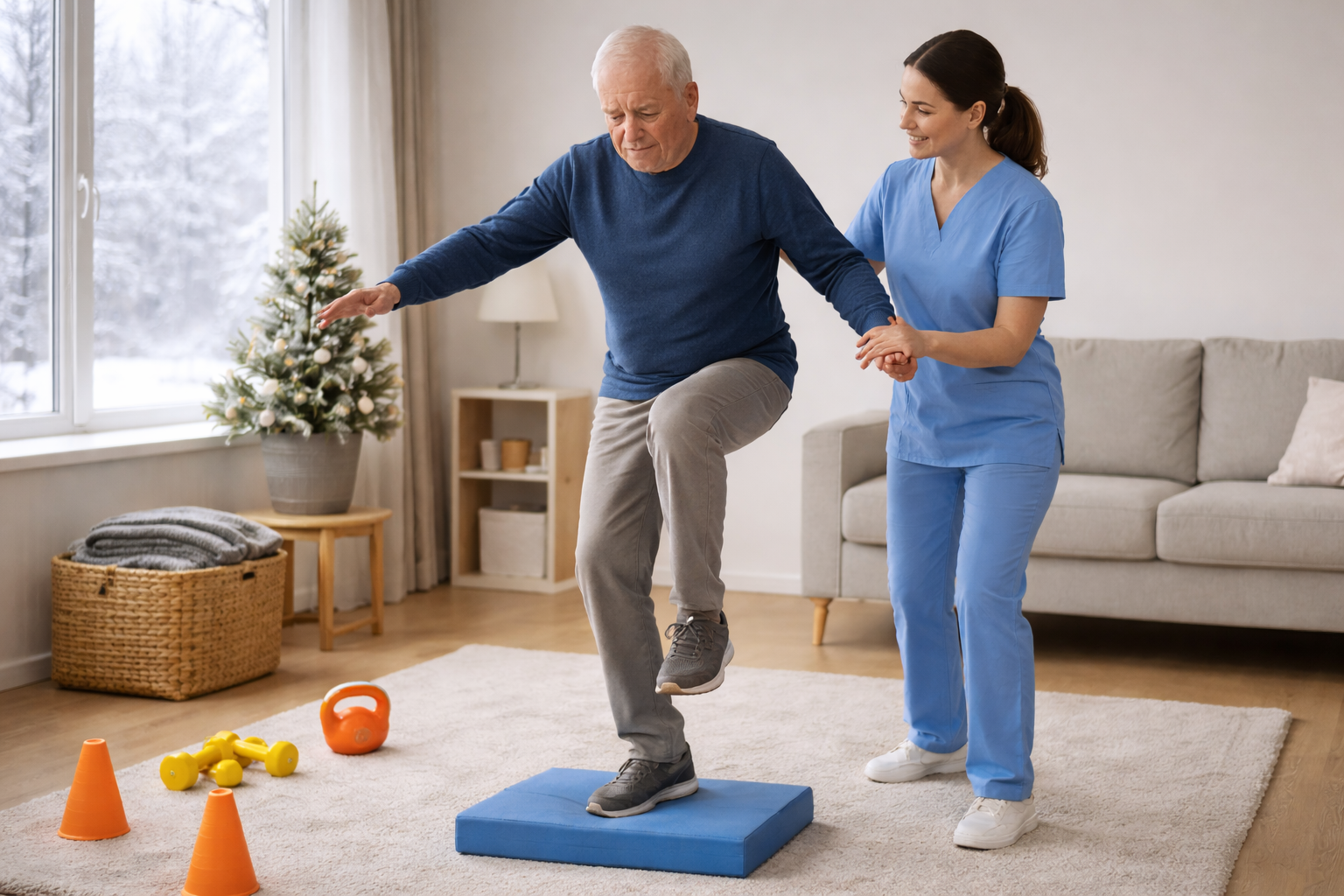
Every winter, emergency rooms see a surge in fall-related injuries — and many of them happen after the holidays.
Between colder weather, busy schedules, and reduced activity, balance and strength often take a hit in late December and January. What feels like a small slip or stumble can quickly turn into a serious injury.
Understanding why fall risk increases this time of year — and how to reduce it — can help you stay safe through the winter months.
Why Falls Increase After the Holidays
1. Fatigue and Routine Disruption
The holidays are physically and mentally exhausting. Travel, social gatherings, and disrupted sleep all affect coordination and reaction time.
When the body is tired, balance responses slow down — making slips more likely.
2. Reduced Activity and Deconditioning
Many people move less during the holidays. Fewer walks, skipped exercise routines, and more time sitting lead to:
- Loss of leg strength
- Reduced endurance
- Slower balance reactions
Even a few weeks of reduced activity can noticeably impact stability.
Related internal link:
[Why Getting Up From a Chair Gets Harder With Age — and How Physical Therapy Fixes It](internal link to published blog)
3. Winter Weather Conditions
Ice, snow, wet entryways, and uneven sidewalks all increase fall risk — especially when combined with weaker muscles or poor balance.
External source:
https://www.cdc.gov/falls
4. Holiday Clutter and Home Hazards
Decorations, extension cords, extra furniture, and crowded walkways create trip hazards that often linger well into January.
Even small obstacles can cause a fall when balance is compromised.
5. Increased Caution That Backfires
After a near-fall, many people walk more cautiously — taking smaller steps and stiffening their posture. This actually reduces stability and increases the risk of falling again.
Internal link:
[Shuffling When You Walk? What It Means and When to Seek Help](internal link to published blog)
Why Winter Falls Are More Dangerous
Falls in winter often lead to more serious injuries because:
- Cold muscles react slower
- Bulky clothing limits movement
- Surfaces are harder and more slippery
- Recovery from injury is slower in colder months
According to the National Institute on Aging, falls are the leading cause of injury-related hospitalization in older adults.
External source:
https://www.nia.nih.gov/health/prevent-falls-and-fractures
How Physical Therapy Helps Reduce Winter Fall Risk
1. Rebuilding Strength
Physical therapy strengthens the muscles that keep you upright:
Stronger muscles help you recover faster if you slip.
2. Balance and Reaction Training
Therapy retrains how your body responds to sudden changes — such as slipping on ice or stepping on an uneven surface.
Internal link:
How Physical Therapy Helps Improve Gait and Balance as You Age
3. Gait and Walking Confidence
Therapists assess walking patterns and correct:
- Shortened steps
- Poor posture
- Hesitation during turns
Better walking mechanics reduce fall risk both indoors and outdoors.
4. Parkinson’s-Specific Fall Prevention
For individuals with Parkinson’s disease, winter increases challenges like freezing of gait and postural instability.
Internal link:
Parkinson’s Disease Treatment Programs
Targeted therapy helps manage symptoms and maintain safer mobility year-round.
Simple Steps You Can Take Right Now
Along with therapy, these steps help lower winter fall risk:
- Wear shoes with good traction indoors and out
- Keep walkways clear and well-lit
- Use handrails on stairs
- Avoid rushing, especially on cold mornings
Don’t Let Winter Take Away Your Confidence
Falls are not an inevitable part of winter or aging. With the right support, you can stay steady, active, and independent through the colder months.
Schedule a Fall Risk & Balance Evaluation
📍 Synaptic Rehabilitation
1200 Route 22 East, Suite 4
Bridgewater, NJ 08807
📞 Call: 908-801-6425