
How to Improve Balance as You Age: When Home Exercises May Not Be Enough
Have you started holding the railing more tightly when you use the stairs? Maybe you reach for the kitchen counter when turning around, feel less steady on uneven sidewalks, or find yourself avoiding activities that used to feel easy.
Balance changes can happen gradually, which makes them easy to overlook. You might assume you’re simply getting older or that you need to be more careful. But feeling unsteady isn’t something you have to accept without exploring what might help.
Balance depends on several systems working together, including muscle strength, vision, sensation, coordination, and your body’s ability to respond when your position changes. If one or more of these systems isn’t working as well as before, everyday movements may begin to feel less predictable.
Regular activity and appropriately chosen exercises can help support balance as you age. However, if you’re already experiencing unsteadiness, repeated near-falls, or difficulty walking safely, general home exercises may not address everything you need.
Here’s what can affect your balance, what you can do to support it, and when working with a physical therapist may be a better next step.
Why Does Balance Become More Difficult With Age?
Balance isn’t controlled by one muscle or body part. Your brain receives information from your eyes, inner ears, and sensory nerves, then coordinates your muscles to keep you upright and respond to changes around you.
Age-related changes can affect several parts of this process.
1. Your Leg Muscles May Become Weaker
Your leg and hip muscles help you stand, walk, climb stairs, and recover when you start to lose your balance.
If these muscles become weaker or less conditioned, everyday activities may require more effort. Getting up from a low chair, stepping onto a curb, or catching yourself after a misstep can become harder.
This doesn’t mean every balance problem comes from weakness. But strength is an important part of maintaining stable movement.
2. You May Not Sense Changes in Position as Clearly
Your body uses sensory information from your feet, ankles, joints, and muscles to understand where you are in space.
For example, you may not consciously think about how your foot is positioned when stepping off a curb. Your nervous system processes that information automatically and helps adjust your movement.
When sensation is reduced, your body may have a harder time responding to uneven surfaces or changes in position. Some people with peripheral neuropathy or neurological conditions experience this type of difficulty.
3. Your Vision May Play a Bigger Role
Vision helps you judge distances, notice obstacles, and understand the layout of your surroundings.
When lighting is poor or your vision has changed, moving around may become more challenging. You might feel less confident on dimly lit stairs or when walking across a surface where changes in height are difficult to see.
Your balance system can often compensate for changes in one area, but it may become harder to stay steady when several sources of information are affected at once.
4. Turning and Changing Direction May Take More Effort
Walking in a straight line is only one part of everyday mobility. You also need to turn around, step sideways, move around furniture, and change direction while carrying out other tasks.
These movements require coordination and adjustments in your center of gravity. If your balance reactions are slower or your movement is more restricted, turning may feel less secure than walking forward.
If you’ve noticed that you feel particularly unsteady when turning, backing up, or moving through tight spaces, mention those specific situations to your healthcare provider.
How Can You Improve Balance at Home?
For many older adults, regular physical activity that includes balance work and strengthening can support mobility and help maintain independence.
The CDC’s physical activity recommendations for older adults emphasize a combination of aerobic activity, muscle-strengthening activities, and balance exercises.
The right starting point depends on your current abilities. If you feel steady during everyday activities, the following habits may be useful ways to stay active.
1. Build Strength for Everyday Movement
Strong legs and hips help you stand up, climb stairs, and control your body as you move.
Depending on your abilities, strengthening activities might include repeated sit-to-stand movements from a sturdy chair, resistance-band exercises, or other exercises prescribed for your needs.
The goal isn’t necessarily to lift heavier weights. It’s to build the strength you use when getting around your home and community.
If standing up from a chair is already difficult or you feel unstable while exercising, ask a physical therapist or healthcare professional how to begin safely.
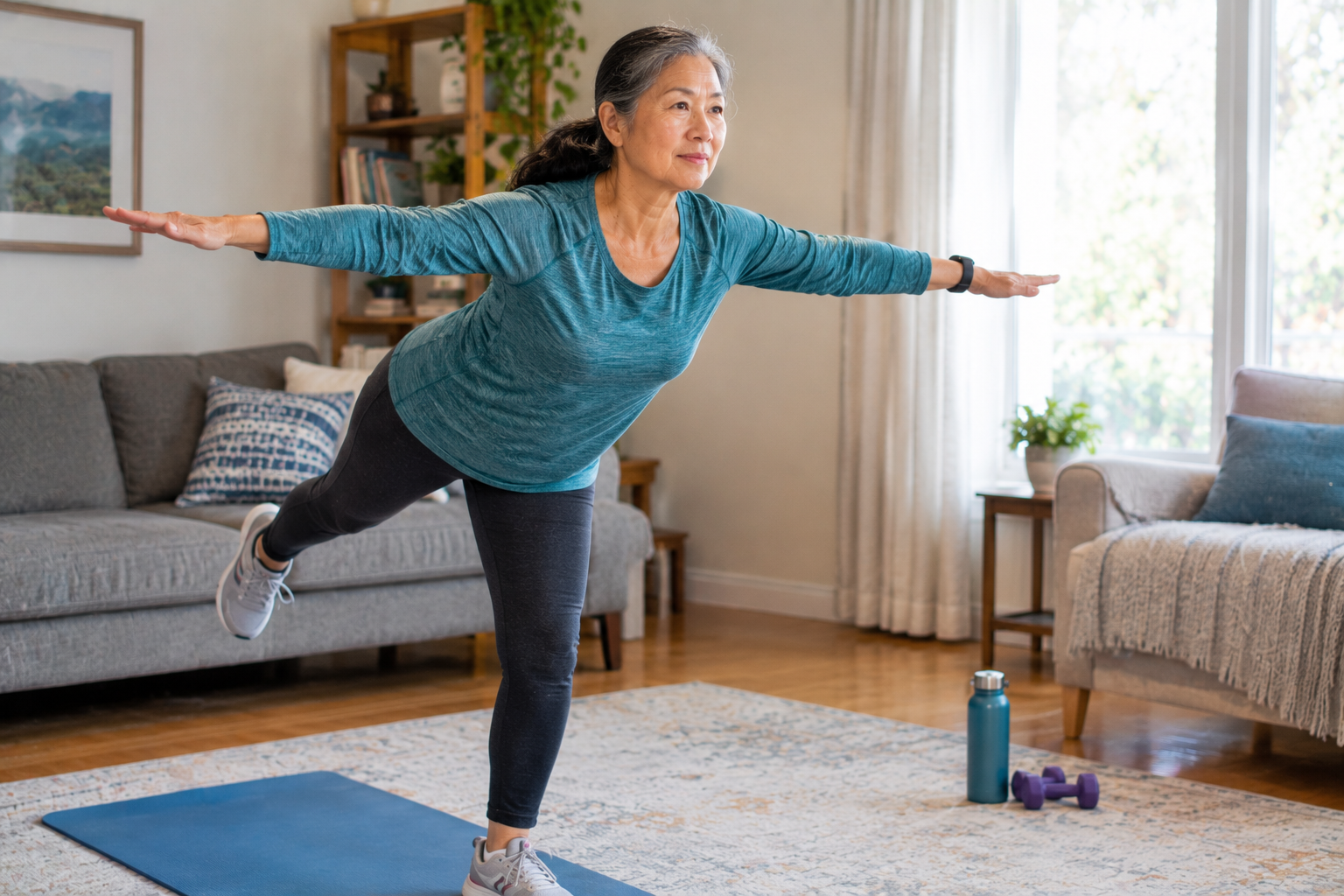
2. Practice Balance in a Safe Setting
Balance is a skill that can be practiced, but exercises should match your current level of stability.
For someone who feels steady, this might involve controlled weight shifts or standing with the feet closer together while keeping a stable support surface within reach.
More challenging exercises, such as standing on one leg or walking heel-to-toe, aren’t appropriate for everyone. If you have a history of falls or feel unsteady while standing, don’t attempt these exercises alone.
Avoid practicing balance on unstable surfaces or closing your eyes to make an exercise harder unless a qualified professional has determined that it’s appropriate for you.
3. Keep Walking, If It’s Safe for You
Walking can help maintain endurance and provide regular opportunities to practice movement.
Start with a route and duration that match your current ability. A short walk on a level, familiar surface may be more appropriate than a long walk on uneven ground.
If you feel unsteady outdoors, consider whether you need a walking aid, a companion, or a safer route. Don’t push through dizziness or significant instability just to complete a walk.
4. Make Your Home Easier to Navigate
Exercise is only one part of staying safe. Your surroundings can also influence how confidently you move.
Consider these practical changes:
- Keep walkways clear of loose rugs, clutter, and electrical cords.
- Improve lighting in hallways, bathrooms, and stairways.
- Install sturdy grab bars where appropriate, especially near the shower or toilet.
- Wear shoes with secure, nonslip soles.
- Use handrails on stairs.
- Keep frequently used items within easy reach to reduce unnecessary climbing or stretching.
These adjustments don’t replace balance training, but they can reduce avoidable hazards while you work on your mobility.
When Might Home Exercises Not Be Enough?
General exercise guidance can be useful, but it can’t account for every person’s balance challenges.
You may benefit from an individualized physical therapy assessment if:
- You have fallen or frequently catch yourself before falling.
- You hold onto furniture or walls when walking around your home.
- You feel unsteady when turning, stepping over obstacles, or walking on uneven surfaces.
- You avoid shopping, social activities, or outdoor walks because you’re worried about losing your balance.
- You have difficulty getting up from a chair or climbing stairs.
- Your balance has changed noticeably, even though you’re staying active.
These changes don’t automatically mean you need a particular treatment. They do suggest that it may be worth identifying what’s contributing to the difficulty instead of relying on general exercises alone.
If your balance has suddenly changed, seek urgent medical attention. Sudden difficulty walking, new weakness or numbness, trouble speaking, or other possible stroke symptoms require an immediate call to 911.
What Does a Physical Therapist Look at During a Balance Assessment?
A physical therapist doesn’t simply ask you to stand on one foot and decide whether your balance is good or bad.
An assessment may examine how different parts of your movement work together and where you need the most support.
Walking and Turning
Your therapist may observe how you walk, change direction, navigate obstacles, and adjust your steps. Turning and changing direction can reveal challenges that aren’t obvious when walking in a straight line.
Leg Strength and Functional Movement
You may be assessed during activities such as standing up from a chair, stepping up, or shifting your weight. These movements help show how strength and coordination affect everyday tasks.
Sensation and Coordination
Depending on your history and symptoms, the assessment may include checks related to sensation, joint position awareness, and coordination.
These factors can influence how well your body responds to changes in the ground beneath your feet or adjustments in your position.
Your Daily Routine and Personal Goals
A useful assessment also considers what you want to do more comfortably.
Maybe you want to walk around the neighborhood, manage stairs without feeling anxious, shop independently, or keep up with your grandchildren. Those goals help guide a plan that’s relevant to your life.
How Physical Therapy Can Help Improve Balance
Physical therapy can address the specific movement challenges identified during an assessment.
Depending on your needs, treatment may include:
Individualized balance exercises. Activities can progress gradually as your ability and confidence improve.
Strengthening exercises. Targeted work may help improve your ability to stand, step, and control your movement.
Gait training. You can practice walking, turning, changing direction, and navigating obstacles with guidance appropriate to your current abilities.
Functional training. Exercises can focus on activities that matter in daily life, such as getting out of a chair, climbing stairs, or moving around your home.
Walking aid guidance. If a cane or walker would help, a therapist can assess your needs and teach you how to use the device correctly.
For people living with Parkinson’s disease, recovering from a stroke, or managing another neurological condition, balance difficulties may involve changes in coordination, sensation, movement speed, or the ability to adjust to changing situations. These challenges may require a more specialized approach than a general exercise routine.
Progress varies from person to person. The goal is to identify what you can work on safely and build a plan around your needs.
Don’t Wait Until a Fall Changes Your Routine
It’s common to adjust your habits when balance becomes less reliable. You might stop taking walks, avoid stairs, or ask someone else to handle errands that once felt routine.
Although these changes may feel like sensible precautions, doing less can also reduce opportunities to maintain strength, endurance, and confidence.
You don’t need to wait until you’ve had a fall to ask for help. If everyday movement is becoming harder, a professional assessment can help you understand what may be contributing to the problem and what steps are appropriate for you.
Balance isn’t just about standing still. It’s about being able to move through your day with enough stability and confidence to do the things that matter to you.
Need Help With Balance or Walking Confidence?
At Synaptic Rehabilitation, we help adults work toward improved mobility, safer movement, and greater independence through individualized physical and occupational therapy.
If you’ve noticed changes in your balance, walking, or ability to manage everyday activities, our team can help you explore your therapy options.
Synaptic Rehabilitation
1200 Route 22 East, Suite 4
Bridgewater, NJ 08807
Call 908-801-6425 to learn more about our therapy services.

Steven Cheung, DPT
Steven is the founder and lead physical therapist at SYNAPTIC Rehabilitation. He earned a BS in Exercise Science Applied Kinesiology from Rutgers University in New Brunswick, NJ and his Doctorate degree from American International College in Springfield, MA. Steven specializes in movement disorders such as Parkinson’s disease and many other neurological disorders. Outside of practicing physical therapy Steven enjoys time with his wife, running, and staying active.