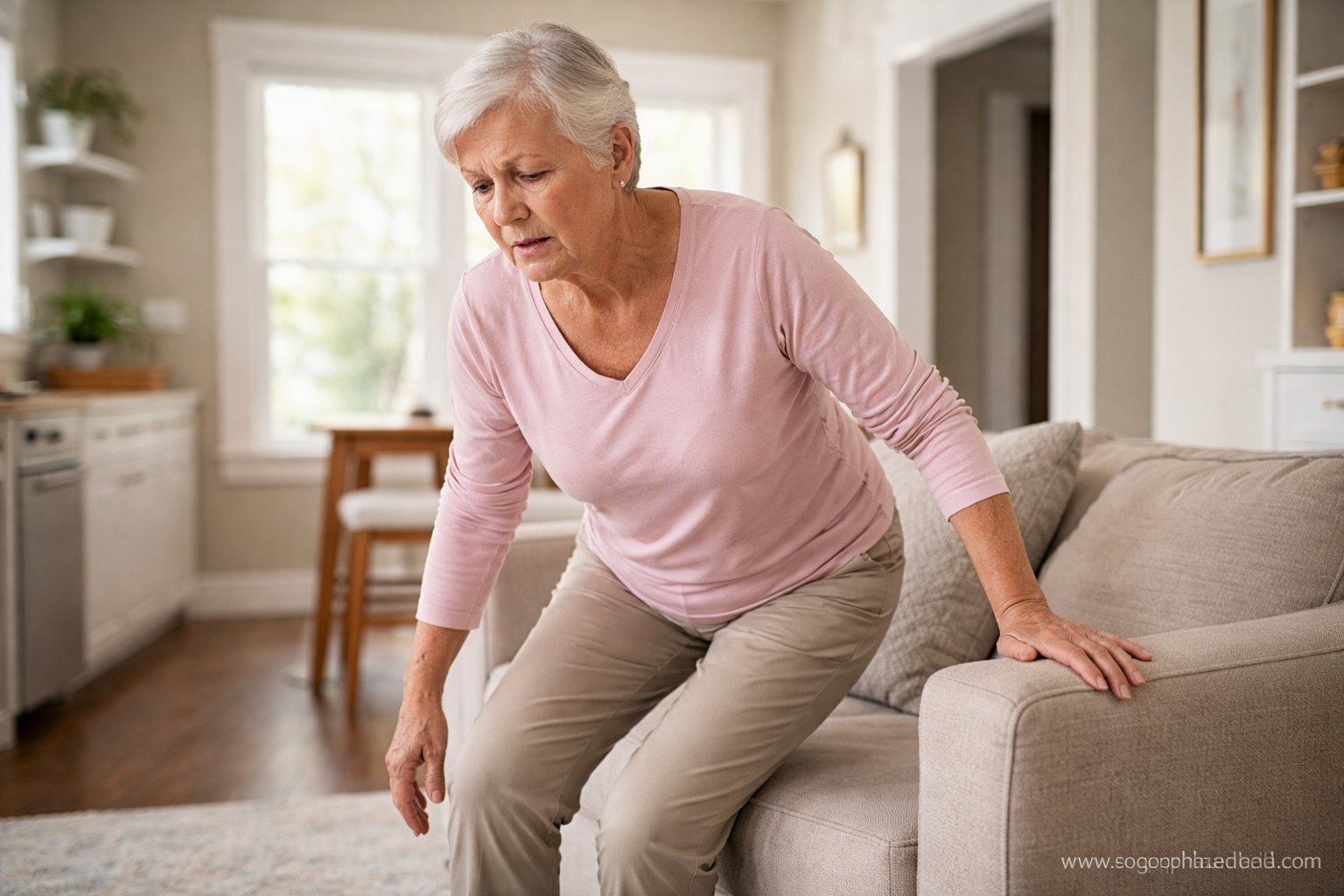
Have you ever stood up and felt unsteady for a few seconds — even though you weren’t dizzy?
Maybe your first few steps feel uncertain, or you need a moment to “find your balance.”
This is a common experience, especially as we age. And while it’s often dismissed, it’s actually an early sign that your balance and movement systems need support.
Why Standing Up Is More Complex Than It Seems
Standing up isn’t just a simple movement.
Your body has to:
- Shift your weight forward
- Activate your legs and core
- Stabilize your posture
- Adjust your blood pressure
- Transition into walking
All within a few seconds.
If any part of this process is delayed, you may feel off-balance — even without true dizziness.
It’s Not Always About Blood Pressure
Many people assume this feeling is caused by a drop in blood pressure.
While that can happen, most cases of brief unsteadiness without dizziness are related to:
- Delayed muscle activation
- Weak lower body strength
- Slower balance reactions
- Poor coordination during movement transitions
Internal link:
[Why Sitting Too Much Is Worse for Balance Than You Think](internal link to published blog)
What Happens in Those First Few Seconds
When you stand:
1. Your Muscles Need to Activate Quickly
Your legs and core must engage immediately to support your body weight.
If they respond slowly, you may feel unstable.
2. Your Balance System Has to “Catch Up”
Your brain needs to process a rapid change in position and adjust your posture.
If reaction time is slower, there’s a brief window of instability.
3. Your First Steps Are the Most Vulnerable
Many falls happen not when standing up — but during the first 1–3 steps afterward.
Internal link:
[Why Small Trips Happen Before Big Falls — and What They’re Telling You](internal link to published blog)
Why This Gets Worse With Age
As we age:
- Muscle strength declines
- Reaction time slows
- Coordination decreases
- Confidence drops
This makes transitions — like sitting to standing — less automatic and more effortful.
External source:
https://www.nia.nih.gov/health/balance-problems-and-falls
Standing Up and Parkinson’s Disease
For individuals with Parkinson’s disease, this transition can be even more challenging.
They may experience:
- Slower movement initiation
- Postural instability
- Hesitation before stepping
- Increased risk of freezing
External source:
https://www.parkinson.org/understanding-parkinsons/movement-symptoms
Internal link:
Parkinson’s Disease Treatment Programs
Signs This Is More Than Occasional
You may need to address this if:
- You regularly feel unsteady after standing
- You pause before walking
- You reach for support when getting up
- Your first steps feel uncertain
- You’ve had near-falls during transitions
Internal link:
[How Physical Therapy Helps You Regain Confidence After a Near-Fall](internal link to published blog)
How Physical Therapy Improves Standing Transitions
1. Strength Training for Sit-to-Stand
Improves leg and core strength so standing feels controlled and stable.
Internal link:
[Why Getting Up From a Chair Gets Harder With Age — and How Physical Therapy Fixes It](internal link to published blog)
2. Transition Training
Therapists break down and retrain the movement from sitting → standing → walking.
3. Reaction Time and Balance Training
Improves how quickly your body stabilizes after position changes.
4. Gait Initiation Training
Focuses on making the first steps smoother and more automatic.
Internal link:
How Physical Therapy Helps Improve Gait and Balance as You Age
Those First Steps Matter Most
Feeling off-balance when standing up isn’t something to ignore.
It’s often one of the earliest signs that your balance system needs attention — and one of the most preventable causes of falls.
Schedule a Balance & Mobility Evaluation
📍 Synaptic Rehabilitation
1200 Route 22 East, Suite 4
Bridgewater, NJ 08807
📞 Call: 908-801-6425
If your first steps feel unsteady, physical therapy can help you regain control, stability, and confidence from the moment you stand.