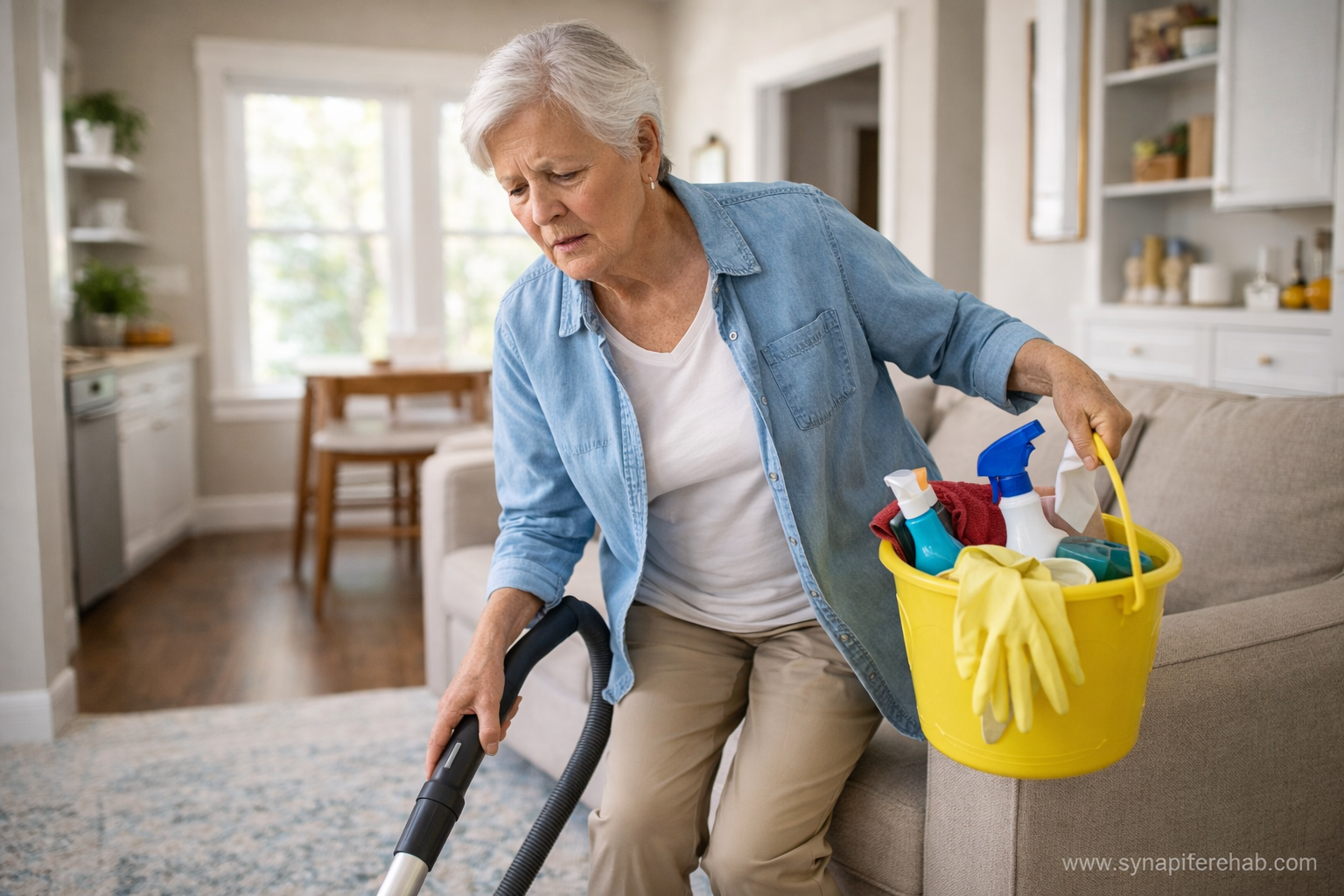
As the weather warms up, many people start tackling spring cleaning projects.
Clearing clutter, reaching high shelves, moving furniture — it all feels productive. But these tasks also introduce unexpected fall risks, especially for older adults and individuals with Parkinson’s disease.
Most falls don’t happen during exercise.
They happen during everyday activities — like cleaning your home.
Why Spring Cleaning Increases Fall Risk
Household tasks combine multiple challenges at once:
- Reaching overhead
- Bending down repeatedly
- Carrying items
- Navigating cluttered spaces
- Moving quickly between tasks
Each of these increases the demand on your balance system.
When combined, the risk rises significantly.
The Most Common Risk Factors During Cleaning
1. Reaching and Overhead Movements
Reaching up shifts your center of gravity backward, making it harder to stay balanced.
This is especially risky when:
- Standing on your toes
- Reaching from a step stool
- Looking upward while reaching
2. Bending and Returning Upright
Repeated bending can cause:
- Temporary instability
- Slower balance recovery
- Lightheadedness in some cases
Internal link:
[Why You Feel Off-Balance When You First Stand Up — Even Without Dizziness](internal link to published blog)
3. Carrying Items While Walking
Holding objects reduces your ability to use your arms for balance.
Internal link:
[The Hidden Role of Arm Swing in Safe Walking](internal link to published blog)
It also creates a dual-task situation.
Internal link:
[Why Walking and Talking at the Same Time Can Increase Fall Risk](internal link to published blog)
4. Fatigue Builds Up Quickly
Cleaning often involves sustained activity without breaks.
Fatigue can lead to:
- Slower reaction time
- Poor coordination
- Reduced stability
Internal link:
[Why Fatigue Makes Balance Worse — Even If You’re Strong](internal link to published blog)
5. Cluttered or Tight Spaces
Spring cleaning often means working in:
- Tight corners
- Crowded rooms
- Around furniture
Internal link:
[Why Doorways and Narrow Spaces Increase Fall Risk](internal link to published blog)
These environments increase the chance of missteps.
Spring Cleaning and Parkinson’s Disease
For individuals with Parkinson’s disease, these challenges can be more pronounced.
Tasks like turning, reaching, and navigating tight spaces may increase:
- Freezing episodes
- Hesitation
- Loss of balance
External source:
https://www.parkinson.org/understanding-parkinsons/movement-symptoms
Internal link:
Parkinson’s Disease Treatment Programs
Simple Ways to Reduce Risk While Cleaning
- Take frequent breaks to avoid fatigue
- Keep commonly used items within easy reach
- Avoid climbing on unstable stools or chairs
- Clear pathways before starting
- Move slowly when changing positions
Small adjustments can significantly reduce fall risk.
How Physical Therapy Helps You Stay Safe During Daily Activities
Physical therapy focuses on preparing your body for real-life movements, not just exercises.
1. Functional Strength Training
Improves your ability to bend, reach, and lift safely.
2. Balance Training in Real Scenarios
Simulates everyday movements like reaching, turning, and carrying objects.
Internal link:
How Physical Therapy Helps Improve Gait and Balance as You Age
3. Movement Strategy Training
Teaches safer ways to perform common tasks.
4. Endurance Training
Helps your body maintain stability even as you get tired.
Daily Activities Are Where Falls Actually Happen
You don’t need to avoid activity — but you do need to be prepared for it.
Spring cleaning is a great reminder that balance matters most during the tasks you do every day.
Schedule a Balance & Mobility Evaluation
📍 Synaptic Rehabilitation
1200 Route 22 East, Suite 4
Bridgewater, NJ 08807
📞 Call: 908-801-6425
If everyday tasks are starting to feel more challenging, physical therapy can help you stay safe, active, and independent.