
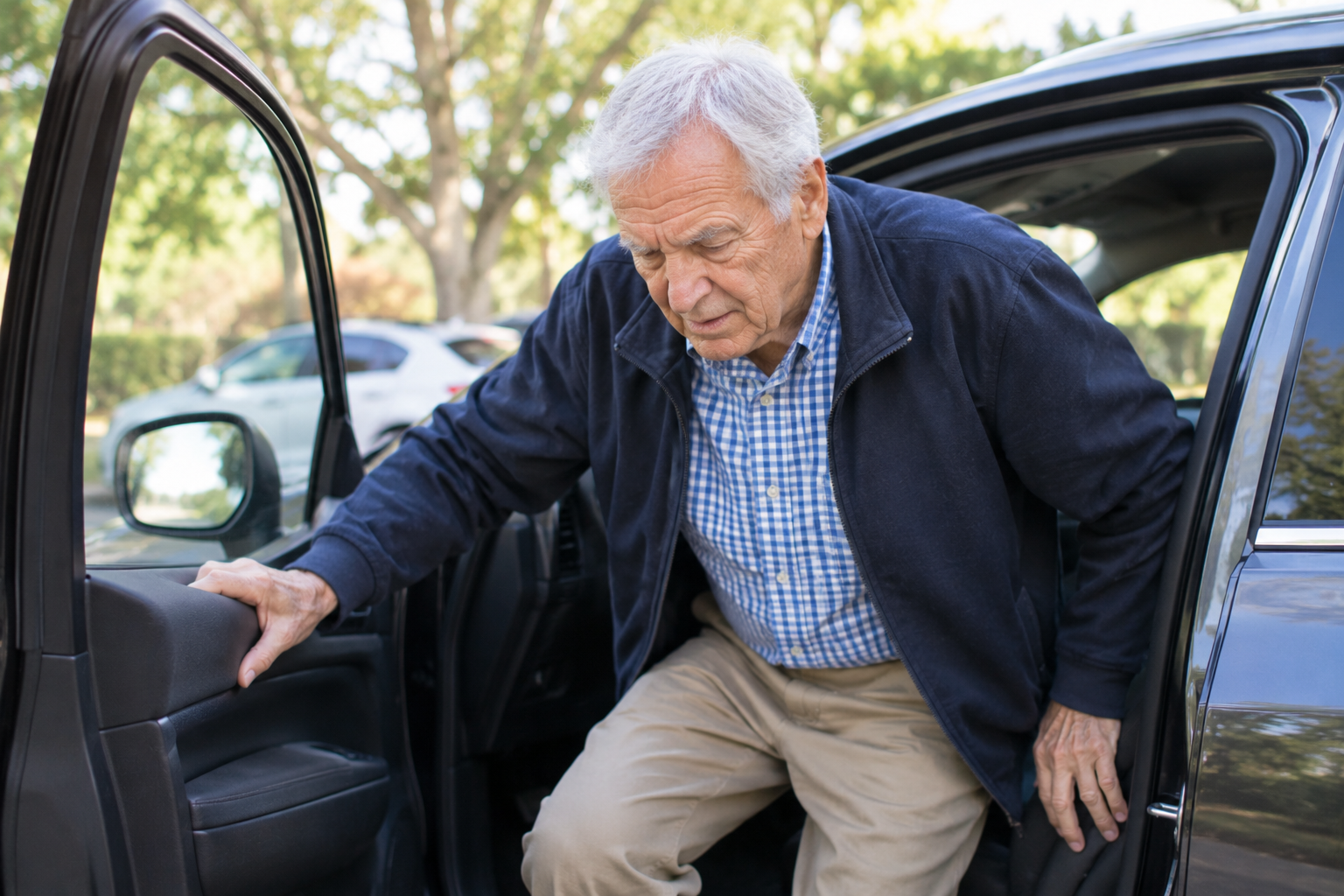
Why Getting In and Out of a Car Can Become Harder With Parkinson's Disease
Getting in and out of a car seems like a simple task. You open the door, turn your body, lower yourself into the seat, and bring your legs inside.
But if you live with Parkinson’s disease, this everyday movement may take much more effort than it used to.
You might find yourself struggling to turn toward the seat, having trouble lifting your legs into the car, or needing several attempts to stand up when you reach your destination. Sometimes, you know exactly what you want your body to do, but getting all the movements to happen smoothly is another challenge.
These difficulties aren’t necessarily caused by a lack of strength. Parkinson’s affects the way the brain controls and coordinates movement. Stiffness, slower movement, reduced movement size, and balance changes can all make getting in and out of a vehicle more complicated.
Understanding why this happens can help you find safer ways to manage car transfers and identify when physical therapy may be useful.
Why Does Parkinson’s Make Getting in and Out of a Car Difficult?
Getting into a car involves several movements that need to happen in a particular sequence. You have to turn, shift your weight, bend your hips and knees, lower yourself, and reposition your legs.
Getting out requires the reverse process, often while working against the low height of the seat.
Parkinson’s can affect several parts of this sequence.
1. Stiffness Makes Turning More Difficult
One of the common movement changes associated with Parkinson’s is rigidity, or increased muscle stiffness.
You may notice that turning your upper body or shifting your hips takes more effort. Instead of smoothly rotating toward the car seat, you may feel as though your body moves in separate steps.
This matters because getting into a car requires your shoulders, trunk, hips, and legs to work together.
If your trunk doesn’t rotate easily, you may have difficulty positioning yourself correctly before sitting down. You might also need to make several small adjustments to get your legs into the vehicle.
2. Slower Movement Makes Transfers Take Longer
Parkinson’s can cause bradykinesia, which means slowness of movement.
A task that once happened automatically may now require more concentration and effort. You might pause between movements or find that it takes longer to complete each part of the transfer.
For example, you may be able to stand beside the car but struggle to coordinate the next steps:
- Turning toward the seat.
- Reaching for a stable support.
- Lowering yourself onto the seat.
- Bringing your legs into the vehicle.
The difficulty isn’t necessarily that you cannot perform these movements. It may be that initiating and coordinating them takes more time.
3. Smaller Movements Make It Harder to Position Your Body
Parkinson’s can also cause hypokinesia, or reduced movement amplitude.
This means movements may become smaller than intended.
When getting into a car, you may not turn far enough toward the seat, step close enough to the vehicle, or lift your legs high enough to clear the door frame comfortably.
You might need several adjustments to reach the right position.
These smaller movements can also affect how you stand up when leaving the car. If you don’t position your feet far enough underneath your body, generating enough forward movement to stand may be more difficult.
4. Balance Changes Can Make You Feel Less Secure
Getting in and out of a car requires you to shift your weight while changing positions.
You move from standing to sitting, and later from sitting back to standing. During these transitions, your center of gravity changes.
Parkinson’s can affect postural control and the body’s ability to make quick adjustments when balance is challenged.
You may feel less steady when turning, stepping around the open car door, or standing up from a low seat.
This can make you more hesitant, especially if you’ve experienced a fall or near-fall.
5. Freezing Can Interrupt the Movement
Some people with Parkinson’s experience freezing of gait. This is a temporary difficulty initiating or continuing movement, often described as feeling as though the feet are stuck to the floor.
Freezing can happen when approaching a doorway, turning, or moving through a narrow space.
The area around a car door can create similar challenges because you need to approach the vehicle, change direction, and step into a confined space.
Not everyone with Parkinson’s experiences freezing, but if it happens during car transfers, it can make the process feel unpredictable.
Why Getting Out of the Car Can Be Just as Difficult
Many people focus on getting into the vehicle, but getting out can be equally challenging.
Car seats are often lower than standard chairs. When you sit for a while, your muscles may also feel stiffer, making it harder to move immediately.
To stand up, you need to move your body forward, position your feet, lean your trunk, and push through your legs.
Parkinson’s-related movement changes can affect each part of this process.
You may notice:
- Difficulty bringing your feet underneath your knees.
- Trouble leaning forward enough to stand.
- Hesitation when initiating the movement.
- Difficulty straightening your hips and knees.
- Feeling unsteady immediately after standing.
If you need to pull yourself up using the car door or another unstable surface, the transfer may become even less safe.
The goal is to find a consistent approach that gives you enough space, support, and time to complete the movement.
Practical Strategies for Getting Into and Out of a Car
The safest approach depends on your mobility, balance, and the type of vehicle you use. These general strategies may help, but they should be adapted to your abilities.
1. Position Yourself Before Sitting
Avoid rushing to get into the vehicle.
Stand close enough to the seat to avoid taking unnecessary steps, but leave enough room to turn safely. Make sure the vehicle is parked on level ground and the door is fully open.
Before sitting, take a moment to position your body and feet.
If turning is difficult, breaking the movement into smaller steps may make it easier to manage.
2. Use a Consistent Movement Sequence
Having a familiar sequence can reduce the need to figure out each movement as you go.
For example, your therapist may teach you to:
- Approach the seat and position yourself securely.
- Turn your body toward the seat using controlled steps.
- Reach for an appropriate stable support if needed.
- Lower yourself slowly onto the seat.
- Bring your legs into the vehicle one at a time, if that is comfortable and safe.
The exact sequence may differ depending on your mobility and the vehicle.
3. Give Yourself Enough Time
Trying to move quickly can make it harder to coordinate each part of the transfer.
Pause when needed. Focus on completing one movement before starting the next.
If you experience freezing, a therapist may teach you individualized movement strategies or external cues that can help with initiating movement.
4. Prepare Before Standing Up
Before leaving the vehicle, make sure you have enough room to move your legs and position your feet.
If possible, move toward the edge of the seat so your feet can rest firmly on the ground. Avoid trying to stand while your feet are too far forward.
When appropriate, lean your trunk forward and use a stable support strategy recommended by your therapist.
Don’t pull on an open car door unless it is specifically designed and positioned to provide support.
5. Consider Whether the Vehicle Setup Is Right for You
The height and shape of a car seat can make a significant difference.
A seat that’s too low may make standing difficult. A vehicle with limited door space may make turning and bringing your legs inside more challenging.
Depending on your needs, a different vehicle, seat configuration, or professionally recommended transfer aid may make the task easier.
A physical or occupational therapist can help assess your specific situation before you purchase or rely on an assistive device.
When Should You Consider Physical Therapy?
If getting in and out of a car is becoming increasingly difficult, it’s worth discussing the problem with your healthcare provider or rehabilitation team.
You may benefit from a physical therapy assessment if:
- You need several attempts to get out of the car.
- You feel unsteady when turning toward the seat.
- Your feet seem to get stuck when approaching or leaving the vehicle.
- You struggle to lift your legs into the car.
- You need someone to pull you up or reposition your body.
- You’ve had a fall or near-fall during a car transfer.
- You avoid trips because getting in and out of the vehicle feels stressful.
These challenges don’t necessarily mean your Parkinson’s has suddenly progressed. Pain, fatigue, medication-related changes, joint limitations, and other factors can also influence movement.
A healthcare professional can help evaluate new or worsening symptoms.
How Physical and Occupational Therapy Can Help
Car transfers involve more than walking. They require coordinated movement, balance, strength, positioning, and the ability to complete a sequence of actions.
Physical and occupational therapy can address different parts of this task.
Physical Therapy: Improving Movement and Balance
Physical therapy may focus on:
Turning and weight shifting: Practicing controlled movements that help you position your body before sitting or standing.
Functional leg strength: Working on the muscles involved in standing up, lowering yourself into a seat, and stepping.
Balance training: Improving stability during changes in position and direction.
Movement amplitude: Practicing larger, more deliberate movements when reduced movement size makes transfers difficult.
Gait and freezing strategies: Learning techniques that may help with starting, stopping, and turning when freezing is a concern.
Occupational Therapy: Making Everyday Transfers Easier
Occupational therapy focuses on how movement challenges affect daily activities.
An occupational therapist may help you:
- Practice getting into and out of your own vehicle.
- Identify difficulties with positioning and sequencing.
- Explore appropriate transfer equipment or vehicle modifications.
- Learn safer ways to manage clothing, personal items, and mobility aids during transfers.
- Develop strategies that support independence while accounting for your current abilities.
Practicing in the actual environment can be particularly helpful because vehicle height, seat depth, door openings, and available support all affect the task.
Small Movement Changes Can Have a Big Impact on Independence
Getting in and out of a car may seem like a minor part of the day, but it affects much more than transportation.
When car transfers become difficult, you may start avoiding appointments, social visits, shopping trips, or activities you enjoy.
That can gradually limit your independence and make it harder to stay connected with the people and places that matter to you.
Parkinson’s-related movement changes can make these tasks more complicated, but there may be practical ways to make them safer and more manageable.
The important thing is to address the specific difficulty rather than assuming you simply need to try harder.
With the right assessment and individualized practice, you can work toward more controlled transfers and greater confidence during everyday activities.
Need Help With Everyday Movement Challenges?
At Synaptic Rehabilitation, we help people living with Parkinson’s disease improve mobility, balance, coordination, and independence through individualized physical and occupational therapy.
If getting in and out of a car, turning, or managing other everyday movements has become more difficult, our team can help you explore strategies that fit your needs.
Synaptic Rehabilitation
1200 Route 22 East, Suite 4
Bridgewater, NJ 08807
Call 908-801-6425 to learn more about our neurological rehabilitation services.
