
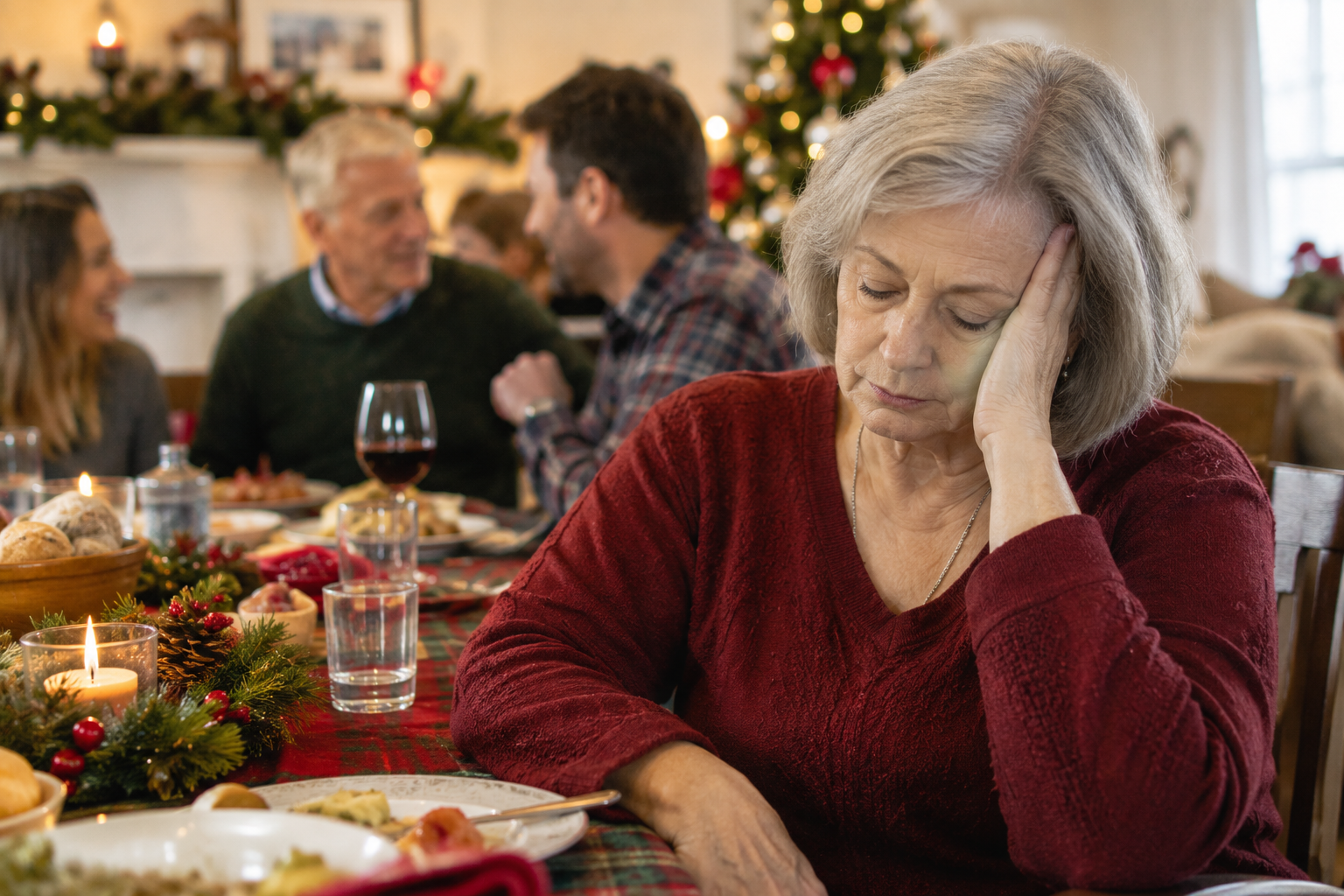
Why Holiday Gatherings Can Be Exhausting After a Stroke or With Parkinson’s
The holidays are supposed to be a time for family, food, and catching up with the people you care about.
But if you’ve had a stroke or live with Parkinson’s disease, a holiday gathering can leave you exhausted long before everyone else is ready to go home.
It’s not just the physical effort.
There may be more people in the room, more conversations happening at once, unfamiliar surroundings, changes to your normal routine, and more walking or standing than you’re used to.
For someone already managing neurological symptoms, all of that can add up quickly.
Why Holiday Gatherings Can Feel So Draining
A typical family gathering may involve several things your brain and body have to manage at the same time.
You may be:
- Walking through a crowded room
- Talking while trying to move
- Standing for longer than usual
- Listening to multiple conversations
- Navigating unfamiliar spaces
- Keeping track of personal belongings
- Eating and drinking while socializing
- Adjusting to a different schedule
- Trying to ignore fatigue because you don’t want to miss anything
None of these activities seems particularly difficult on its own.
The challenge comes from doing many of them together.
Your Brain May Have to Work Harder
After a stroke, tasks that used to happen automatically may require more concentration.
Parkinson’s disease can also affect how easily you initiate and coordinate movement.
Now add a busy holiday environment.
There may be music playing, several people talking, children moving around, and people walking behind you while you’re trying to get somewhere.
This can make it harder to focus on your own movement.
You may notice that walking becomes slower, turning feels more difficult, or you need to concentrate more carefully on where you’re stepping.
That doesn’t necessarily mean your condition has suddenly worsened. The environment itself may simply be demanding more of your attention.
Standing Can Be More Tiring Than You Expect
Holiday gatherings often involve a surprising amount of standing.
You might stand in the kitchen talking with family, wait in line for food, stand during conversations, or move from room to room throughout the day.
If balance, leg strength, or endurance has changed after a stroke or with Parkinson’s disease, this can become tiring quickly.
Instead of waiting until you’re completely exhausted, consider taking short breaks throughout the gathering.
Sitting down for a few minutes isn’t giving up. It can help you conserve energy so you can participate for longer.
Crowded Spaces Can Make Walking Harder
A crowded home or restaurant can create additional challenges.
You may need to:
- Walk around chairs
- Avoid people moving in different directions
- Step over bags or toys
- Turn in tight spaces
- Carry a plate or drink
- Find a place to sit
These situations require more than simply putting one foot in front of the other.
You have to plan where you’re going while constantly responding to what’s happening around you.
If you’ve already experienced balance problems or freezing of gait, crowded environments may require even more attention.
Noise Can Add to the Fatigue
Sometimes it’s the noise, rather than the physical activity, that becomes exhausting.
Following a conversation can be difficult when several people are speaking at once.
After a stroke, changes in attention or processing speed may make it harder to keep up. Parkinson’s disease can also affect speech and communication for some people.
You may find yourself concentrating intensely just to follow a conversation.
By the end of the gathering, your brain may feel as tired as your body.
Changes to Your Routine Matter
Holiday schedules aren’t always predictable.
You may eat later than usual, take a longer car ride, stay up later, or miss your normal exercise routine.
For people with neurological conditions, changes in routine can sometimes make an already challenging day feel even more difficult.
Try to keep important parts of your normal routine as consistent as possible.
If you take medications, follow the schedule prescribed by your healthcare provider and plan ahead for gatherings so medications aren’t accidentally missed.
Don’t change medication timing or dosage without discussing it with your healthcare team.
You Don’t Have to Stay for the Entire Event
One of the easiest ways to make a holiday gathering more manageable is to change the expectation that you need to stay from beginning to end.
You can arrive earlier, leave before you’re completely worn out, or take a quiet break in another room.
Let your family know that your energy may vary from day to day.
Leaving early doesn’t mean you enjoyed the gathering any less.
It may simply mean you’re listening to what your body needs.
Make the Environment Easier to Navigate
If you’re hosting a gathering, a few simple changes can help.
Keep walkways clear of:
- Bags
- Shoes
- Toys
- Electrical cords
- Extra chairs
- Holiday decorations
Make sure there is a stable place to sit and avoid creating narrow pathways between furniture.
Good lighting is also important, particularly if people will be moving around in the evening.
These small changes can reduce unnecessary obstacles and make the space easier to navigate.
Give Yourself Permission to Take Breaks
You don’t have to push through fatigue to prove that you’re doing well.
If you’re tired, sit down.
If the room becomes overwhelming, step somewhere quieter.
If walking becomes more difficult, slow down.
Your goal should be to participate in the holiday, not to perform at the same level you did before your stroke or Parkinson’s diagnosis.
How Neurological Rehabilitation Can Help
Physical and occupational therapy can help you work on the skills that make everyday activities and social situations easier to manage.
Physical therapy may address:
- Balance
- Walking
- Endurance
- Transfers
- Turning
- Fall prevention
Occupational therapy may address:
- Daily activities
- Hand function
- Energy conservation
- Task planning
- Safety at home
- Strategies for managing more demanding environments
Therapy can also help you identify which parts of a busy activity are most challenging and develop strategies around them.
The Goal Is to Stay Involved
A stroke or Parkinson’s disease doesn’t mean you have to stop participating in family traditions.
You may simply need to approach them differently.
Plan breaks. Give yourself extra time. Keep walkways clear. Limit unnecessary distractions when possible. And don’t wait until you’re completely exhausted before slowing down.
The holidays are about spending time with the people you care about. Finding ways to make those moments more manageable can help you stay involved without pushing yourself beyond your limits.
Schedule a Neurological Rehabilitation Evaluation
📍 Synaptic Rehabilitation
1200 Route 22 East, Suite 4
Bridgewater, NJ 08807
📞 Call: 908-801-6425
If fatigue, balance, walking, or everyday activities are making holiday gatherings more difficult, contact Synaptic Rehabilitation to learn how neurological physical and occupational therapy may help.

Steven Cheung, DPT
Steven is the founder and lead physical therapist at SYNAPTIC Rehabilitation. He earned a BS in Exercise Science Applied Kinesiology from Rutgers University in New Brunswick, NJ and his Doctorate degree from American International College in Springfield, MA. Steven specializes in movement disorders such as Parkinson’s disease and many other neurological disorders. Outside of practicing physical therapy Steven enjoys time with his wife, running, and staying active.