
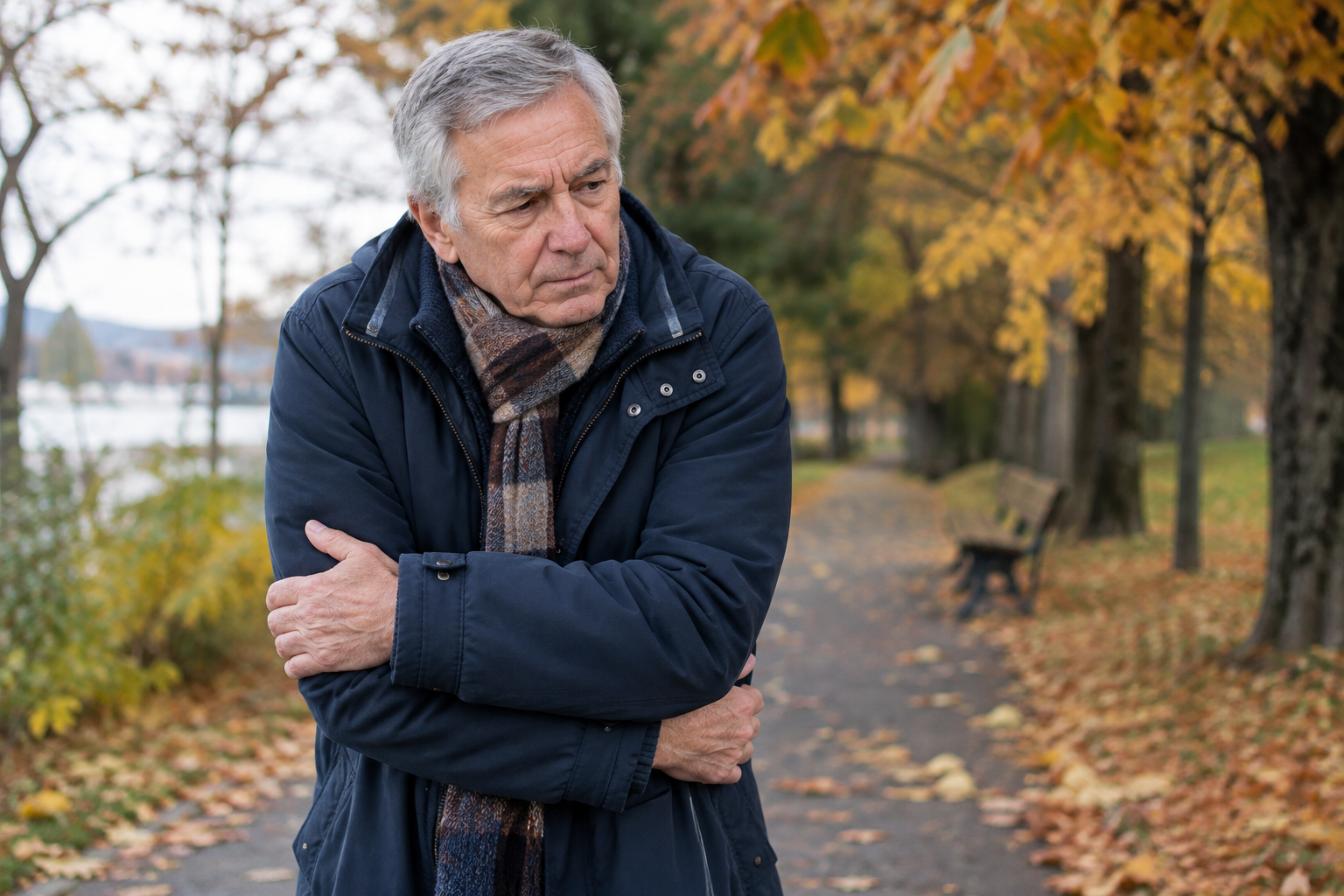
Why Changes in Temperature Can Make Parkinson’s Symptoms Feel Worse in the Fall
As summer turns into fall, you may notice that getting moving in the morning doesn’t feel quite the same.
Your muscles may feel stiffer. Your hands may seem slower. Walking may take more effort. Even simple movements, such as getting dressed or getting up from a chair, may require more concentration.
For people living with Parkinson’s disease, changes in temperature can sometimes make existing movement difficulties more noticeable.
Cold weather doesn’t cause Parkinson’s disease or necessarily mean the disease is progressing. But for some people, colder temperatures can make stiffness, slowness, and other symptoms feel more difficult to manage.
Why Does Cold Weather Affect Movement?
Parkinson’s disease can already make movement slower and muscles feel stiff. When you’re exposed to colder temperatures, your muscles may naturally tense up.
That extra stiffness can make movement feel more restricted.
You might notice it when:
- Getting out of bed in the morning
- Walking outside
- Getting dressed
- Using your hands
- Turning or changing direction
- Standing up from a chair
- Getting in and out of a car
The experience isn’t the same for everyone. Some people notice a clear difference with colder temperatures, while others don’t.
Your Hands May Feel Slower
Temperature changes can be especially noticeable when you’re using your hands.
Parkinson’s disease can affect fine motor movements, making tasks such as buttoning clothing, writing, using utensils, or handling small objects more difficult.
When your hands also feel cold or stiff, these activities may become even more frustrating.
You may find yourself taking longer to:
- Button a shirt
- Tie your shoes
- Open containers
- Handle coins
- Write
- Use utensils
- Manipulate small objects
This doesn’t necessarily mean you’ve suddenly lost hand function. Several factors can make fine motor tasks feel more difficult on a particular day.
Walking May Feel More Difficult
Fall weather can also change your walking environment.
Cooler temperatures may make your body feel stiffer, while wet leaves, uneven sidewalks, or slippery surfaces can add another challenge.
For someone with Parkinson’s disease, walking already may involve managing changes in step length, speed, balance, or turning.
Add a slippery surface or an extra layer of clothing, and a familiar walk may require more attention.
That’s why fall is a good time to think about how you move through your everyday environment, not just how you walk in a therapy gym.
Don’t Forget About Clothing
Fall brings jackets, sweaters, gloves, and heavier shoes.
These may seem like minor changes, but they can affect movement.
A bulky jacket can make arm movement feel restricted. Gloves may make fine motor tasks harder. Heavier footwear can change how your feet feel when you’re walking.
If getting dressed becomes noticeably more difficult, occupational therapy can help you look at the entire task and identify ways to make it easier.
What Can You Do?
You don’t need to avoid cooler weather altogether.
Instead, pay attention to how your body responds and give yourself enough time to get moving.
Some practical strategies include:
Give Yourself Extra Time in the Morning
If stiffness is worse when you first wake up, rushing through your morning routine can make everything feel harder.
Allow time to move gradually before starting more demanding activities.
Keep Yourself Comfortable
Dress appropriately for the weather and keep your hands and body comfortably warm when possible.
If cold temperatures consistently make your symptoms significantly worse, mention this to your healthcare provider.
Be More Careful With Outdoor Surfaces
Wet leaves, rain, and uneven walkways can increase the challenge of walking.
Slow down when necessary and pay attention to changes in the surface beneath your feet.
Keep Moving
Regular physical activity is an important part of managing Parkinson’s disease.
Your physical therapist can help you identify exercises and movement strategies that fit your abilities and goals.
How Physical and Occupational Therapy Can Help
Therapy for Parkinson’s disease isn’t about simply getting stronger.
It can focus on helping you move more efficiently and safely during the activities you actually need to perform.
Physical therapy may address:
- Walking
- Balance
- Turning
- Step length
- Transfers
- Mobility
- Fall prevention
Occupational therapy may focus on:
- Hand function
- Dressing
- Writing
- Eating
- Household activities
- Energy conservation
- Everyday problem-solving
Therapists can also help you develop strategies for days when movement feels more difficult.
Pay Attention to New or Significant Changes
It’s normal for symptoms to fluctuate with Parkinson’s disease, and colder weather may make certain difficulties more noticeable.
However, don’t automatically assume that every new or worsening symptom is simply because of the weather.
If you experience a significant or persistent change in your movement, balance, medication response, or ability to perform daily activities, talk with your neurologist or other healthcare provider.
Your treatment team can help determine whether something else may be contributing.
You Can Prepare for the Change in Seasons
Fall doesn’t have to mean giving up activities you enjoy.
The goal is to understand how changes in temperature and your environment affect your movement so you can plan around them.
If walking, hand use, dressing, or other daily activities have become more difficult with Parkinson’s disease, a neurological rehabilitation evaluation can help identify practical ways to keep you moving and participating in the activities that matter to you.
Schedule a Neurological Rehabilitation Evaluation
📍 Synaptic Rehabilitation
1200 Route 22 East, Suite 4
Bridgewater, NJ 08807
📞 Call: 908-801-6425
If Parkinson’s symptoms are making everyday movement harder this fall, contact Synaptic Rehabilitation to learn how physical and occupational therapy can support safer, more confident movement.

Steven Cheung, DPT
Steven is the founder and lead physical therapist at SYNAPTIC Rehabilitation. He earned a BS in Exercise Science Applied Kinesiology from Rutgers University in New Brunswick, NJ and his Doctorate degree from American International College in Springfield, MA. Steven specializes in movement disorders such as Parkinson’s disease and many other neurological disorders. Outside of practicing physical therapy Steven enjoys time with his wife, running, and staying active.