
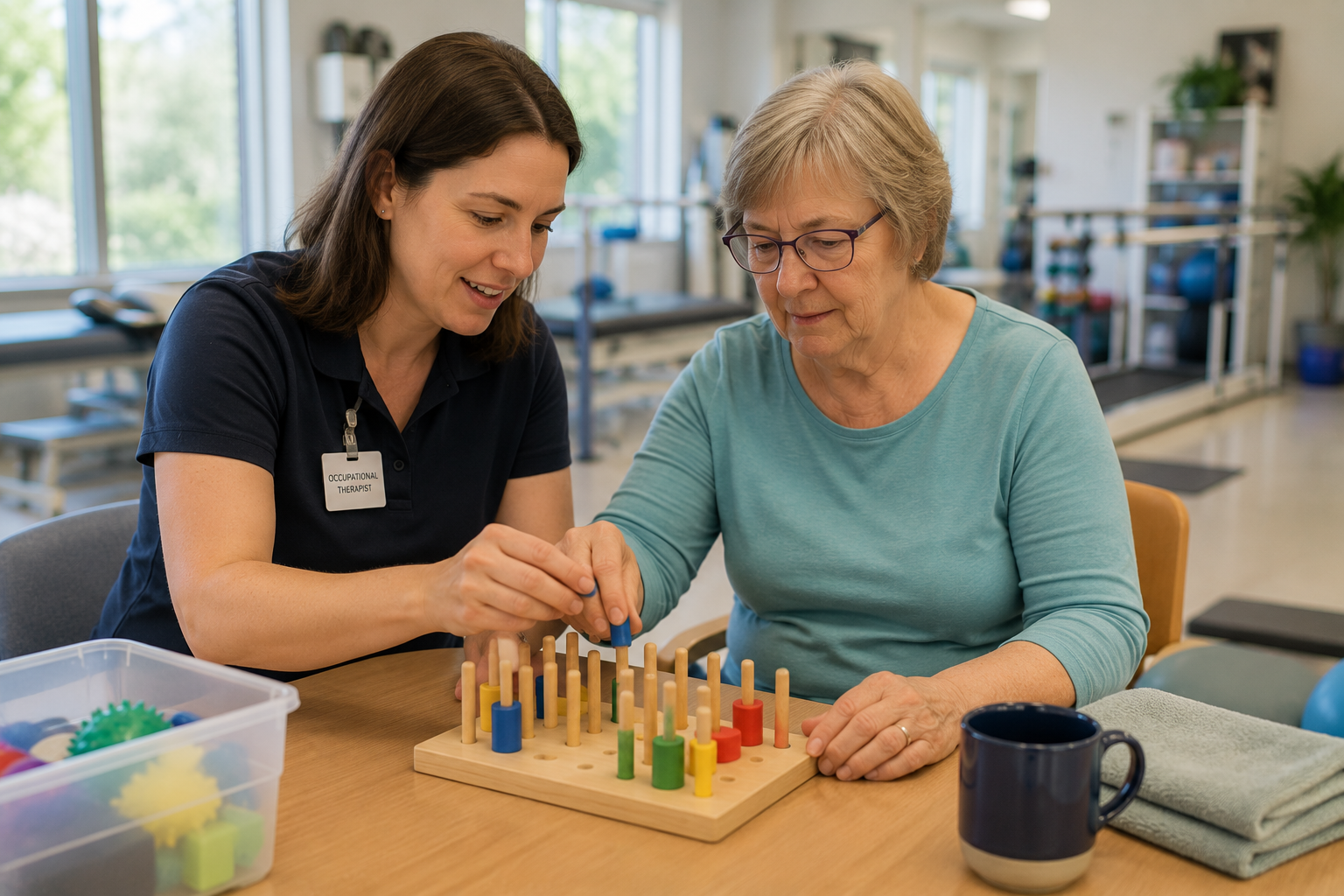
What Does Occupational Therapy Actually Help With?
When most people hear the word occupational therapy (OT), they assume it has something to do with work.
In reality, occupational therapy is about helping people perform the everyday activities—or “occupations”—that make up daily life.
Whether you’re recovering from a stroke, living with Parkinson’s disease, or managing another neurological condition, occupational therapy can help you regain the skills needed to live as independently as possible.
From getting dressed in the morning to preparing meals or writing a grocery list, occupational therapists focus on helping you do the activities that matter most.
What Is Occupational Therapy?
Occupational therapy helps people improve their ability to complete everyday tasks safely and independently.
These tasks may include:
- Getting dressed
- Bathing and grooming
- Preparing meals
- Writing
- Using a phone or computer
- Managing medications
- Household chores
- Returning to hobbies
Rather than focusing only on strength, occupational therapy addresses how your body, hands, brain, and senses work together during daily activities.
External source:
https://research.aota.org/practice
How Is Occupational Therapy Different From Physical Therapy?
Occupational therapy (OT) and physical therapy (PT) often work together, but they focus on different goals.
Physical therapy primarily helps improve:
- Walking
- Balance
- Strength
- Mobility
- Endurance
- Fall prevention
Occupational therapy focuses on helping you use those physical abilities during everyday activities.
For example:
A physical therapist may help you improve your balance so you can stand safely.
An occupational therapist may help you safely prepare a meal, get dressed, or use the bathroom independently.
Together, OT and PT provide a comprehensive rehabilitation plan.
Who Can Benefit From Occupational Therapy?
Occupational therapy can help people recovering from or living with:
- Stroke
- Parkinson’s disease
- Multiple sclerosis (MS)
- Brain injuries
- Neuropathy
- Arthritis
- Hand injuries
- Balance disorders
- Other neurological conditions
The goal is always the same: helping you perform everyday tasks more safely and confidently.
Occupational Therapy After a Stroke
A stroke can affect much more than walking.
Many survivors have difficulty with:
- Using one hand
- Buttoning clothing
- Writing
- Holding utensils
- Preparing meals
- Managing medications
Occupational therapy helps retrain these functional skills through repetitive, task-specific practice.
Learn more: https://synapticrehab.com/why-your-hand-feels-strong-but-still-doesnt-work-properly-after-a-stroke/
Occupational Therapy for Parkinson’s Disease
Parkinson’s disease often affects fine motor skills long before people realize how much daily activities have changed.
Occupational therapy may help with:
- Handwriting
- Dressing
- Using eating utensils
- Opening containers
- Reaching into cabinets
- Energy conservation
- Home safety
Therapists also teach strategies to make everyday activities easier and less frustrating.
Learn more: https://synapticrehab.com/the-hidden-impact-of-parkinsons-disease-on-handwriting/
Occupational Therapy Helps More Than Your Hands
Although hand function is a major focus, occupational therapy also addresses:
- Thinking skills
- Memory strategies
- Visual perception
- Coordination
- Problem-solving
- Safety awareness
These skills are essential for maintaining independence at home and in the community.
Common Goals of Occupational Therapy
Every treatment plan is personalized, but common goals include helping people:
- Dress independently
- Cook safely
- Improve hand coordination
- Return to hobbies
- Use adaptive equipment when needed
- Reduce frustration during daily tasks
- Build confidence at home
Small improvements in these areas can have a significant impact on quality of life.
OT and PT Work Best Together
Many neurological conditions affect the entire body.
For example, someone recovering from a stroke may need:
- Physical therapy to improve walking and balance.
- Occupational therapy to improve dressing, cooking, and hand function.
By working together, both therapies help people become safer and more independent in their daily lives.
Learn more: https://synapticrehab.com/how-physical-therapy-can-help-improve-gait-and-balance-as-you-age/
When Should You Consider Occupational Therapy?
You may benefit from an occupational therapy evaluation if you have difficulty:
- Buttoning clothes
- Writing or typing
- Holding small objects
- Preparing meals
- Using household items
- Completing personal care tasks
- Returning to hobbies you once enjoyed
The sooner these challenges are addressed, the sooner you can begin building strategies to improve independence.
Regaining Independence Starts With Everyday Activities
Recovery isn’t only about walking farther or getting stronger.
It’s also about being able to brush your teeth, make breakfast, sign your name, or play with your grandchildren.
Occupational therapy focuses on the activities that give people confidence and independence in everyday life.
Whether you’re recovering from a stroke, living with Parkinson’s disease, or managing another neurological condition, the right therapy program can help you continue doing the things that matter most.
Schedule a Neurological Rehabilitation Evaluation
📍 Synaptic Rehabilitation
1200 Route 22 East, Suite 4
Bridgewater, NJ 08807
📞 Call: 908-801-6425
If a neurological condition is making everyday activities more difficult, our team can help you improve your mobility, hand function, and independence through individualized physical and occupational therapy services.

Steven Cheung, DPT
Steven is the founder and lead physical therapist at SYNAPTIC Rehabilitation. He earned a BS in Exercise Science Applied Kinesiology from Rutgers University in New Brunswick, NJ and his Doctorate degree from American International College in Springfield, MA. Steven specializes in movement disorders such as Parkinson’s disease and many other neurological disorders. Outside of practicing physical therapy Steven enjoys time with his wife, running, and staying active.